Think Like an Investigator
What does it mean to think like an investigator?
Great investigators don't jump to conclusions—they gather evidence, weigh competing theories, question assumptions, and defend their conclusions with evidence.
These are the same critical thinking skills we want students developing in ELA.
Whether students are analyzing unsolved mysteries, investigating historical events, or evaluating conflicting accounts, these resources help them think like real investigators while strengthening evidence-based reasoning, reading, writing, speaking, and listening.
🛒 Shop The Collection
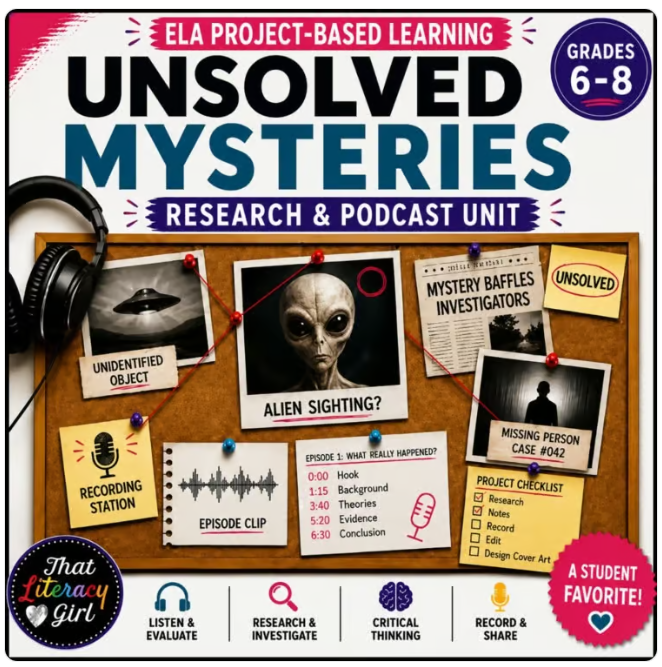
👉Unsolved Mysteries Podcast Project
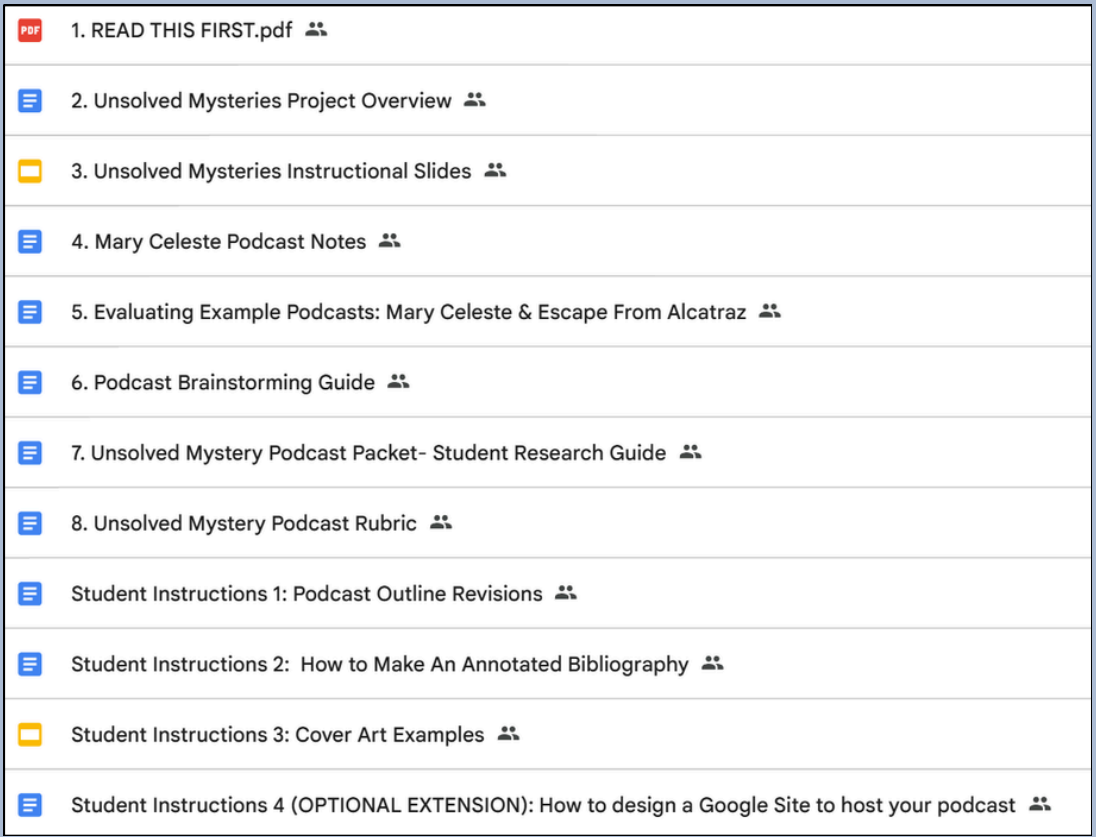
This complete unit includes:
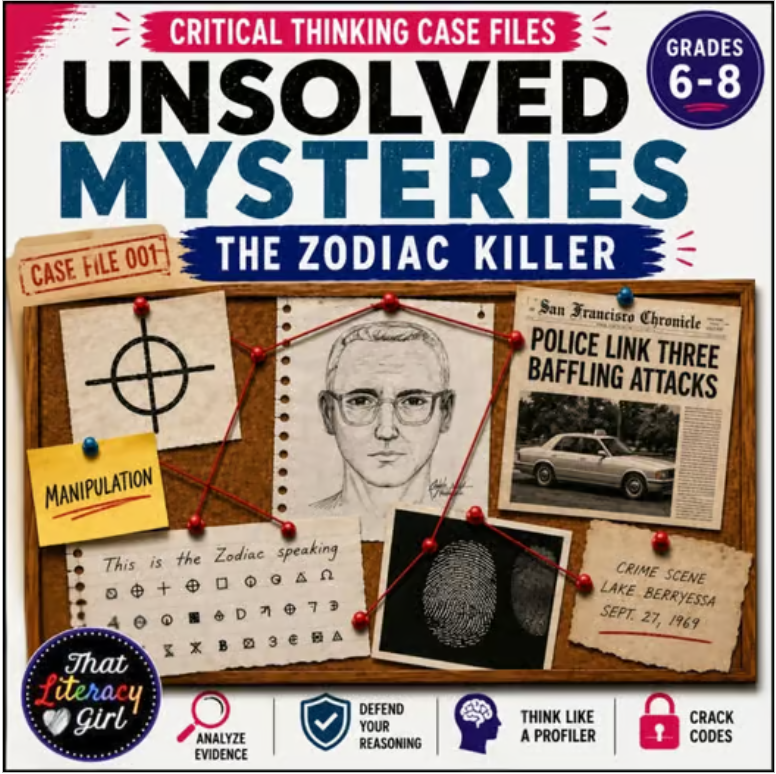
👉Unsolved Mysteries Case Files
Each case file comes with a complete age-appropriate informational text about the unsolved mystery, an evidence tracker emphasizing a different forensic skill, and thoughtful discussion questions for students to reflect on.
📁 Case File 001: The Zodiac Killer
✨Also includes three cryptograms with bonus facts about the case!
📁 Case File 002: DB Cooper
📁 Case File 003: Escape from Alcatraz
✨Also includes an initial investigation activity where students analyze real evidence from the escape to predict how they got away.
More Case Files Coming Soon:
📁 Case File 004: Dyatlov Pass
📁 Case File 005: Lindbergh Baby Kidnapping
📝 Read The Blog
🔎Replace Research Projects with Investigations
Research projects don't have to feel like homework. Discover why swapping generic research topics for real-world mysteries transforms reluctant researchers into curious investigators—and why students suddenly can't wait to dig into the evidence.
🔎The Real-World Unsolved Mysteries Students Love to Debate
What do a vanished hijacker, cryptic coded messages, and an escape from an island prison have in common? They're three unforgettable cold cases that challenge students to analyze evidence, debate competing theories, and decide what really happened.
🔎Turning Source Evaluation Into an Investigation
What happens when middle schoolers mistake satire for fact—even after checking a fact-checking website? This classroom story reveals why today's students need more than a source checklist and how an investigative approach builds the digital literacy skills they'll use for life.