The Real-World Unsolved Mysteries Middle Schoolers Love to Debate
🔎 If your students love solving puzzles, they'll love these mystery-themed cryptograms. They'll practice pattern recognition and problem-solving while uncovering the hidden names of cryptids, famous crimes, and methods of clue collection. I use them as Think Outside the Box Thursday bell ringers or as extension activities for those students who always finish first and ask, "What can I do now?"
Why Students Can't Resist a Good Mystery
Ask students to research the Civil War and most students will audibly groan before they even open their Chromebooks…
And if I’m being honest? Saaaaame.
But ask them to discuss how three notorious criminals escaped a maximum-security prison surrounded by frigid waters, and… suddenly everyone’s invested.
Who wouldn’t be?
That’s the power of a good mystery.
People are naturally drawn to deciphering puzzles and exploring the unknown.
The stranger the mystery, the more bizarre the details, the more invested students become in figuring out what really happened.
They begin noticing the smallest details, looking at evidence from multiple angles, and challenging each other’s conclusions.
In other words, they begin thinking like investigators.
And once students start thinking like investigators, they stop asking, "Is this for a grade?" and start asking, "Wait...what happened next?"
So which historical mysteries are actually worth bringing into your classroom?
With today’s distractions, the content’s gotta be good if we want students to actually buy in.
The following cold cases never fail to fascinate middle schoolers.
Case File 001: The Zodiac Killer
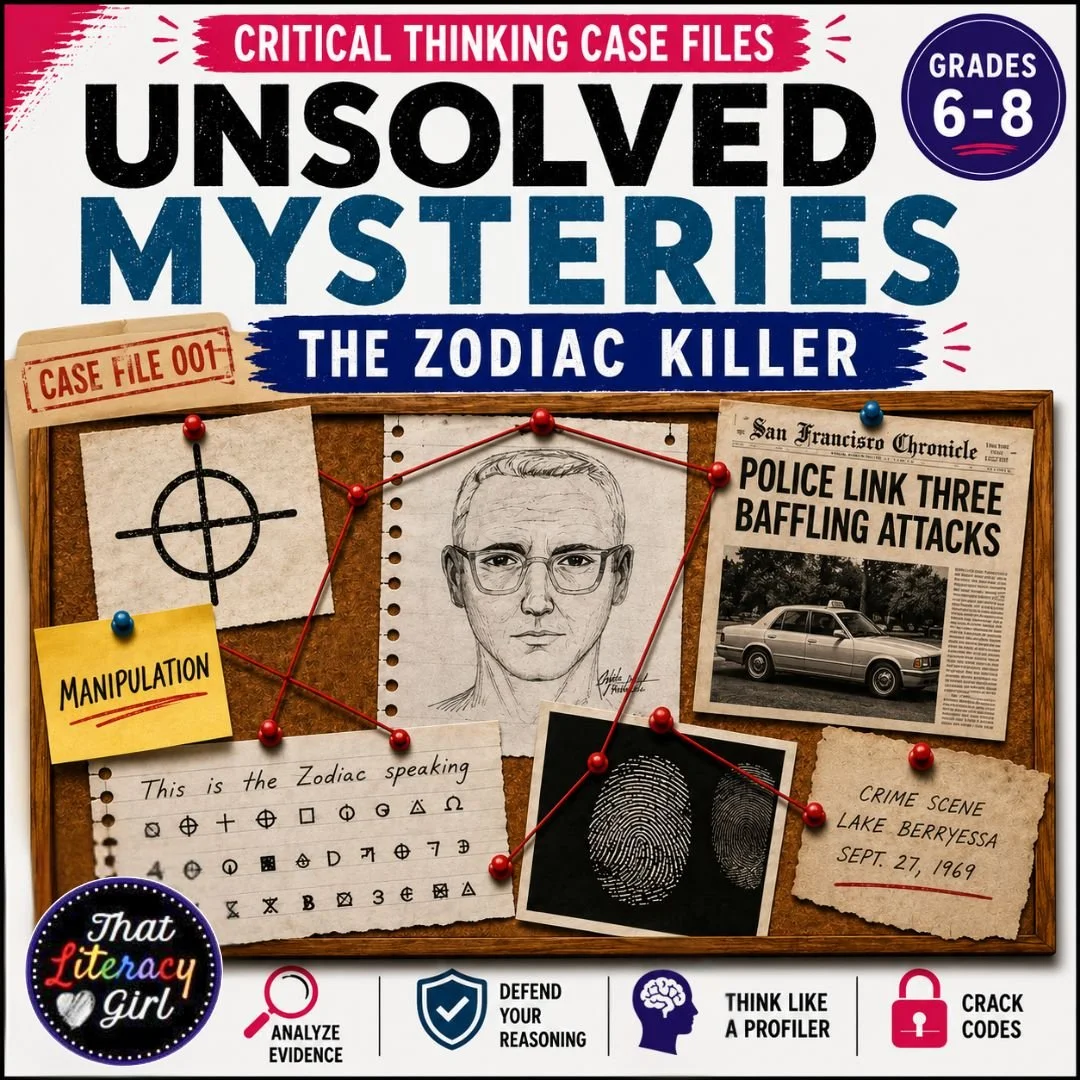
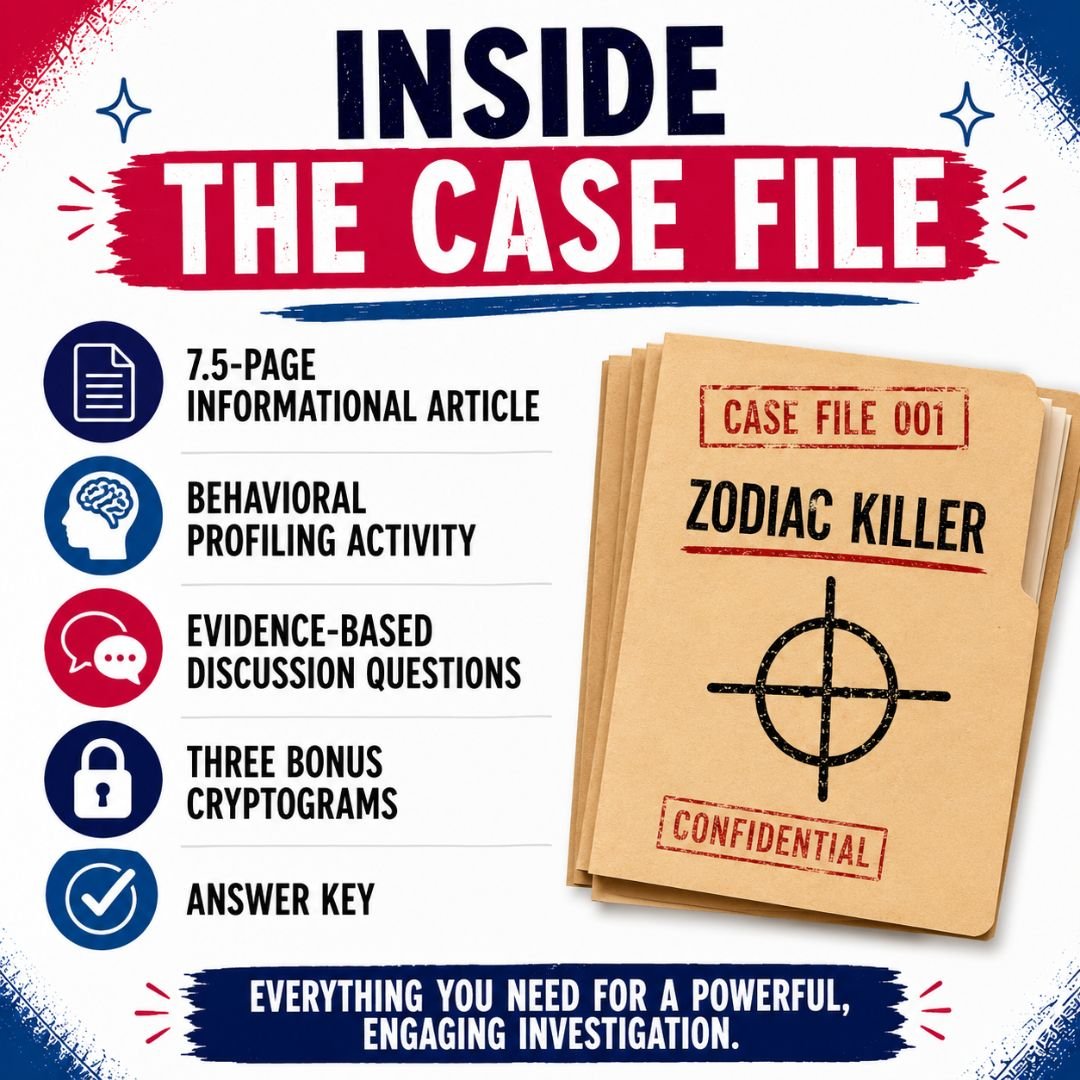
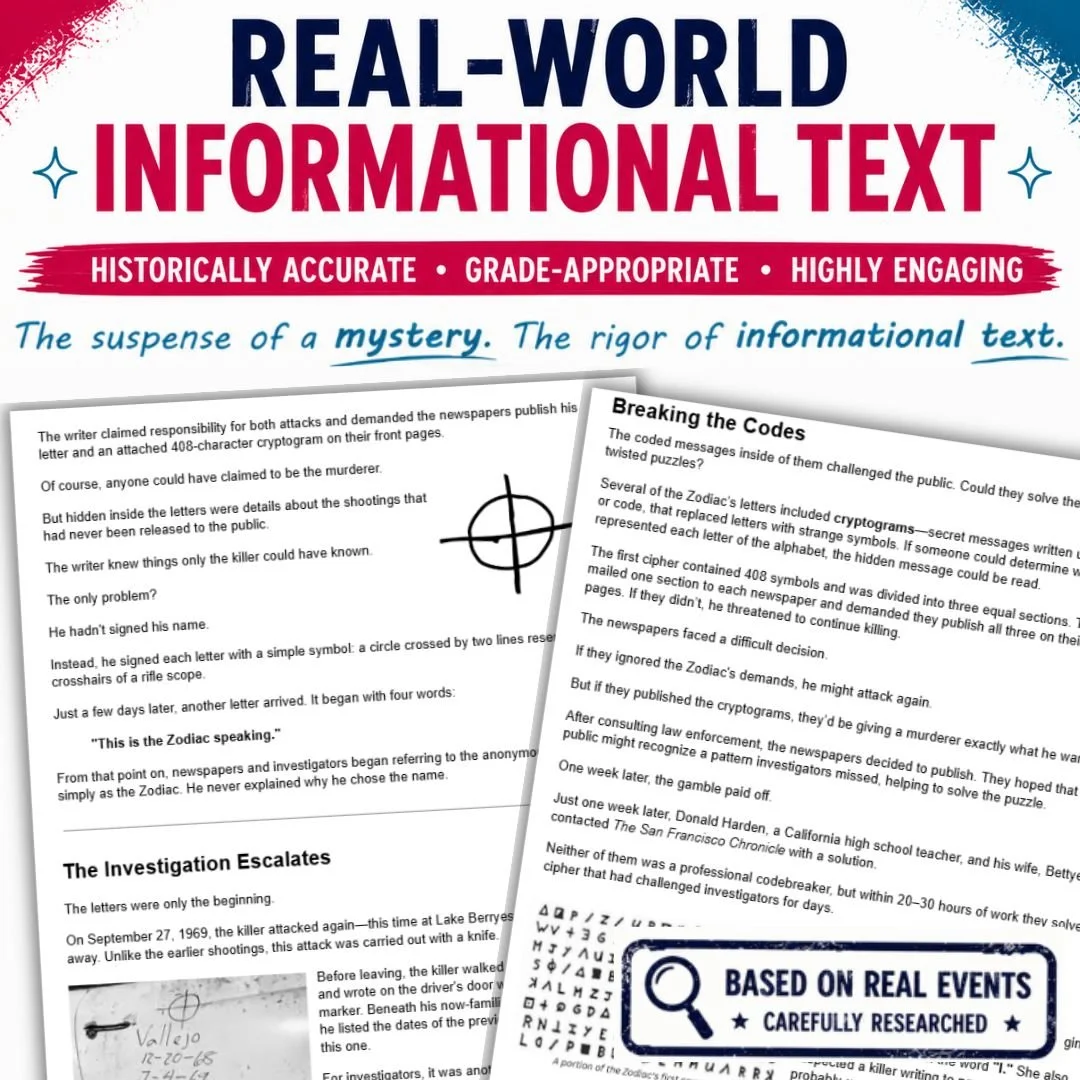
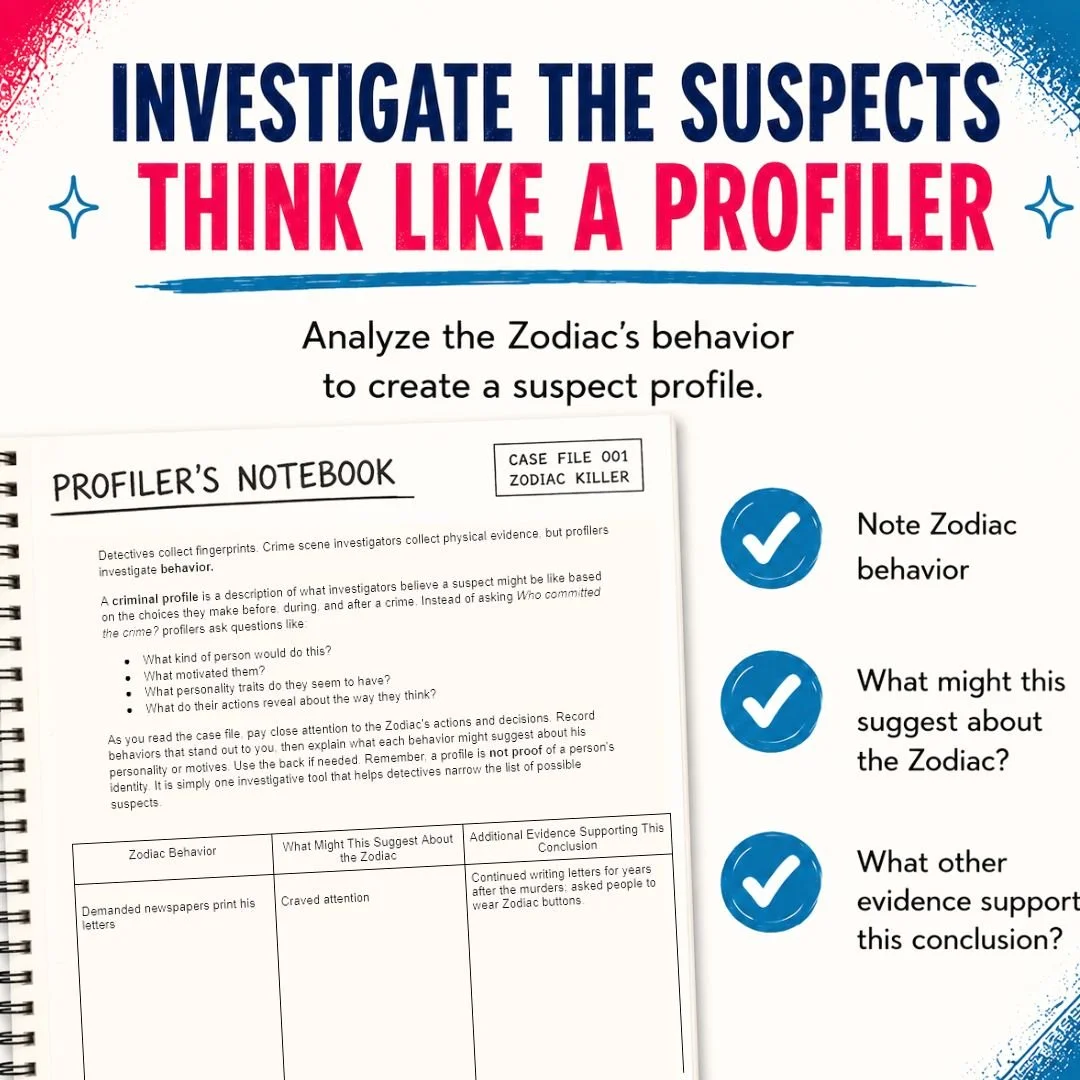
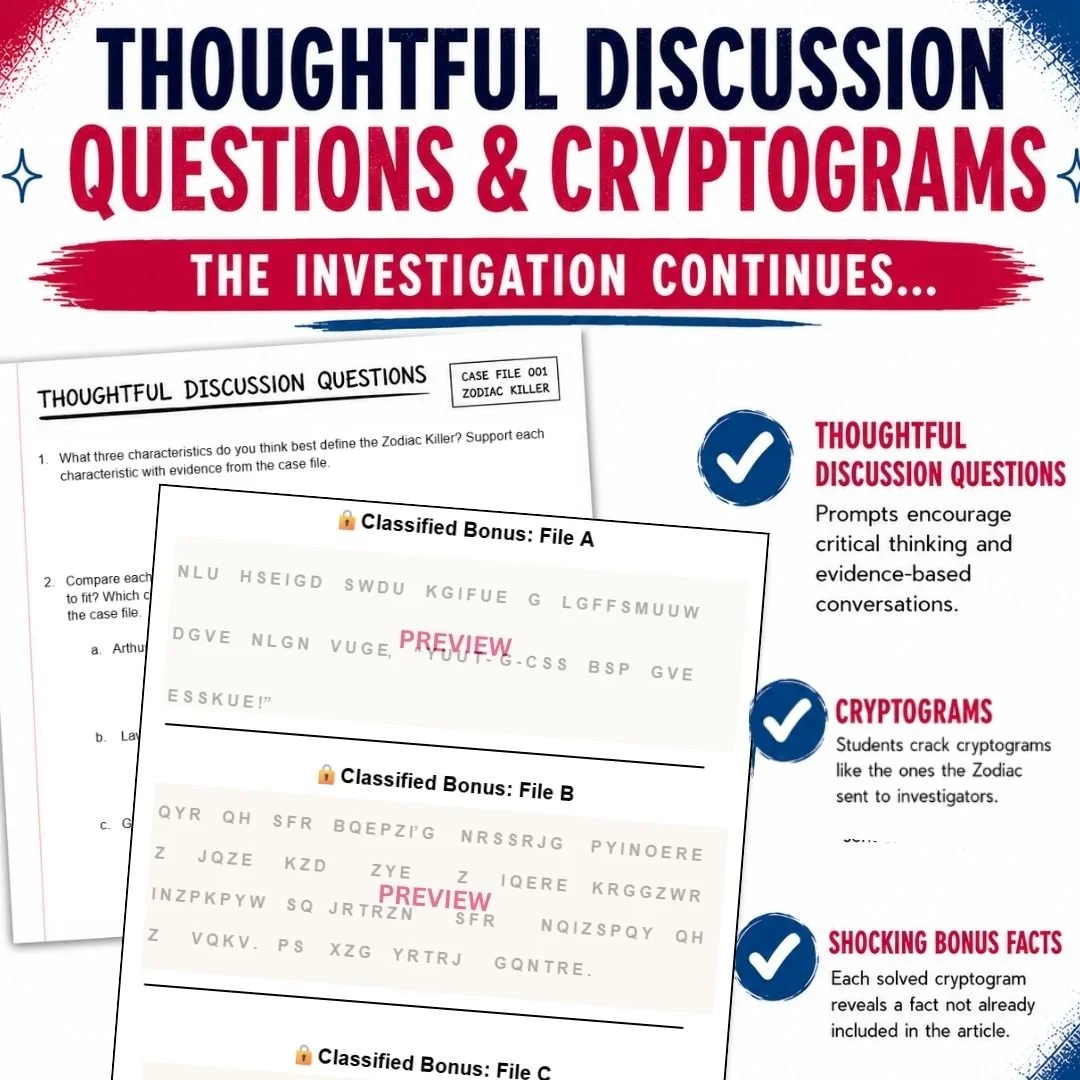
Click the arrows to see more of what’s inside.
Before we dive in, let me say one thing: A great classroom mystery does not have to involve murder.
In fact, some of the most engaging investigations involve disappearances, escapes, strange events, or unexplained phenomena. What matters isn't the crime—it's the unanswered questions.
And when it comes to the Zodiac Killer, there are many.
Unlike most criminals, the Zodiac didn't try to hide from the public.
He wanted people talking about him.
He mailed cryptic letters to newspapers, challenged ordinary citizens to crack his ciphers, and even promised one of his coded messages would reveal his identity.
It didn't.
One of the Zodiac's most famous cryptograms wasn't cracked by the FBI or a professional codebreaker.
It was solved by a California high school teacher and his wife.
Whenever I tell students that, they immediately start wondering whether they could solve one of the Zodiac's remaining ciphers.
More than fifty years later, investigators are still debating who the Zodiac really was—and two of his cryptograms remain unsolved.
If your students enjoy codes, evidence, and spirited classroom debates, this case is always a hit.
Instead of simply reading about the Zodiac Killer, my students become investigators. They build a behavioral profile based on the killer's actions, compare that profile to real suspects, and weigh the strengths and weaknesses of the evidence against each one. Along the way, they even crack bonus cryptograms inspired by the Zodiac's infamous ciphers.
By the end of the investigation, students aren't asking, "Who does the worksheet say did it?" They're arguing over which suspect they believe is the most likely—and defending their conclusions with historical evidence.
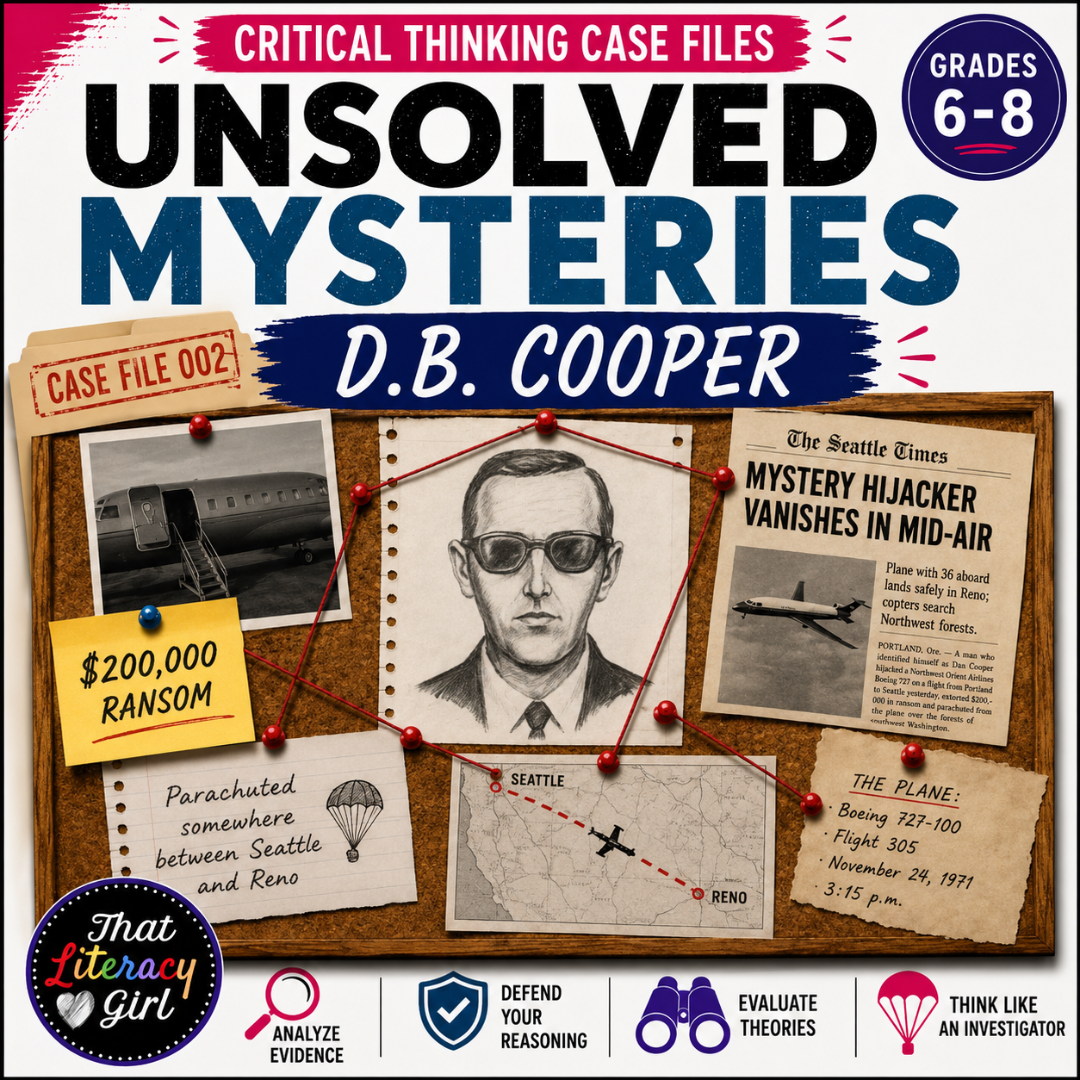
Click the arrows to see more of what’s inside.
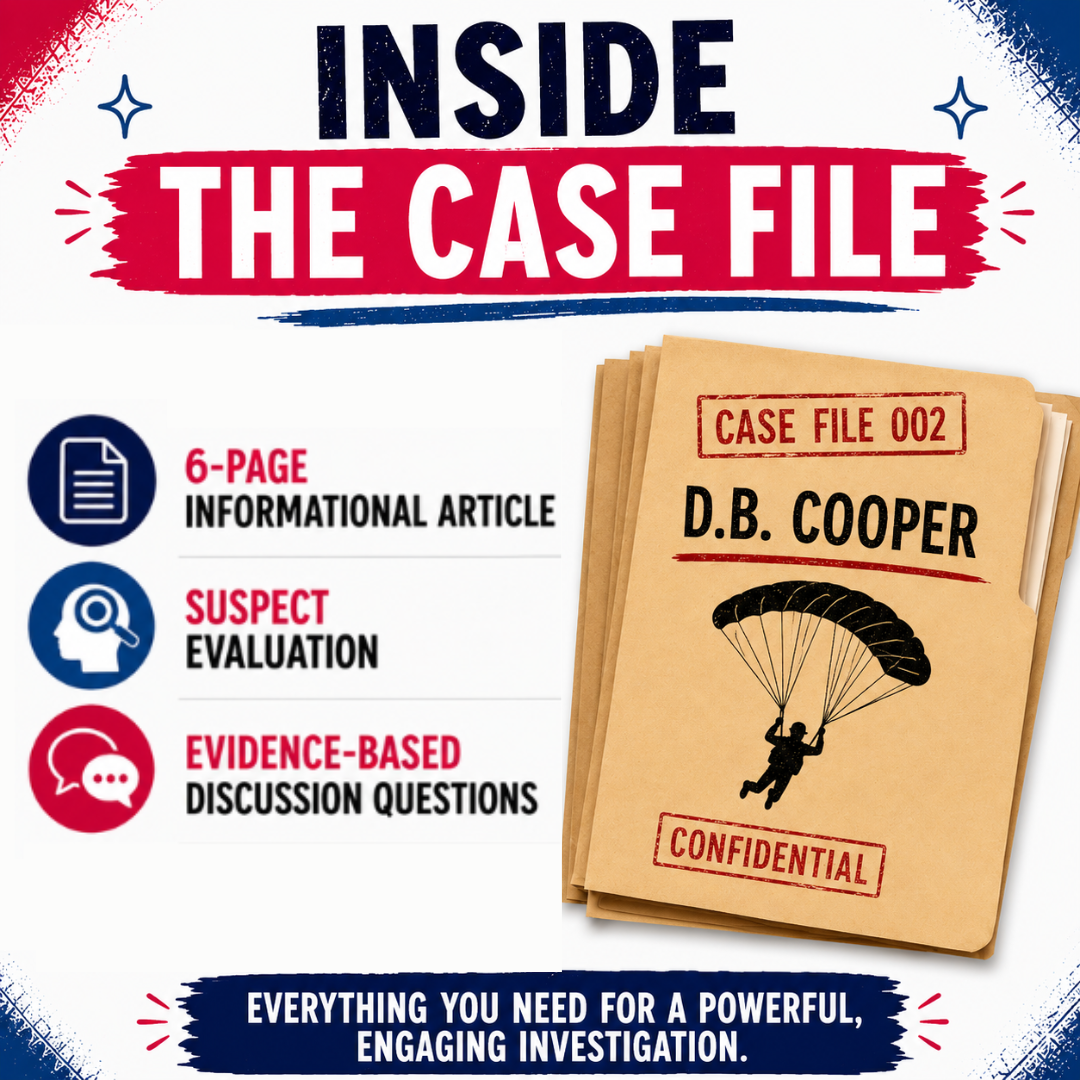
Case File 002: D.B. Cooper
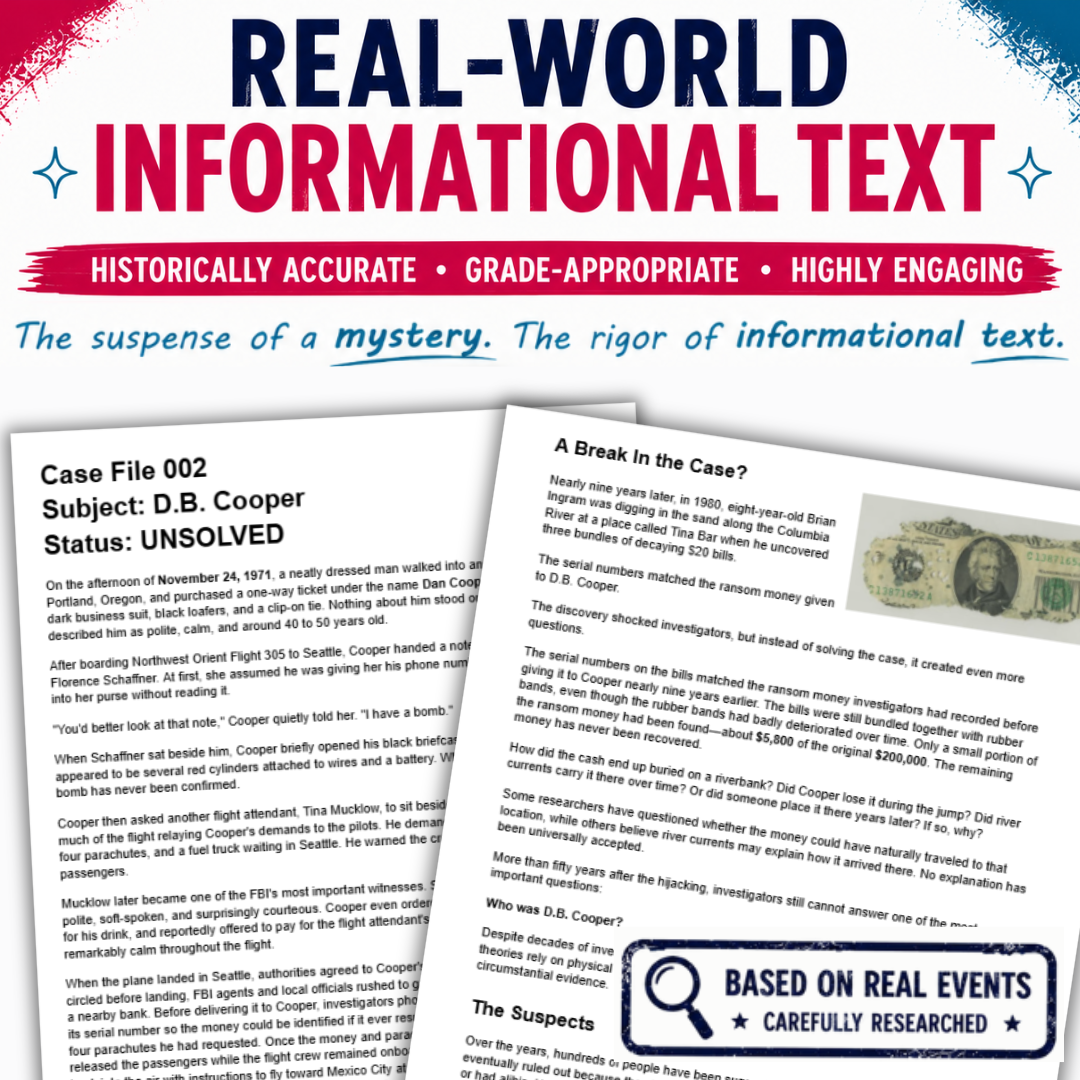
On the eve of Thanksgiving in 1971, an ordinary-looking businessman boarded a flight from Portland to Seattle carrying nothing more than a briefcase.
A few hours later, he had hijacked the airplane, collected $200,000 in ransom money, parachuted into the darkness over the Pacific Northwest...
...and vanished.
Despite one of the largest investigations in FBI history, no one has ever been conclusively identified as D.B. Cooper.
Did he survive the jump?
If so, where did he go?
And if he didn't... why was so little evidence ever found?
Those are questions my students love debating.
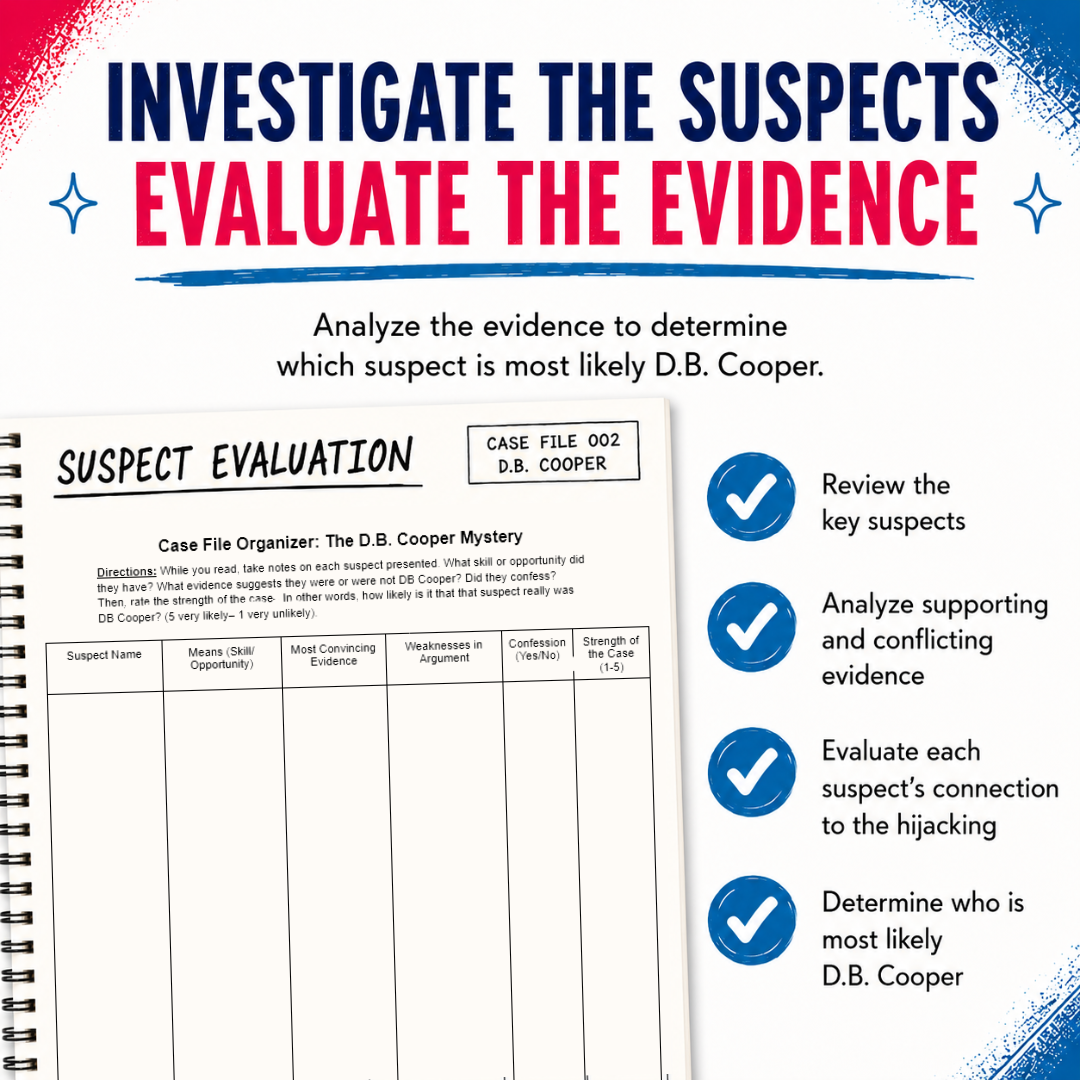
Unlike many mysteries, there isn't just one compelling suspect. There are dozens of theories, each supported by different pieces of evidence. Some suspects had military experience. Others were skilled parachutists.
One even confessed on their death bed.
Of course, so have hundreds of other people.
Instead of simply reading about the hijacking, students investigate the evidence, evaluate competing theories, and decide which suspect they believe is the most convincing.
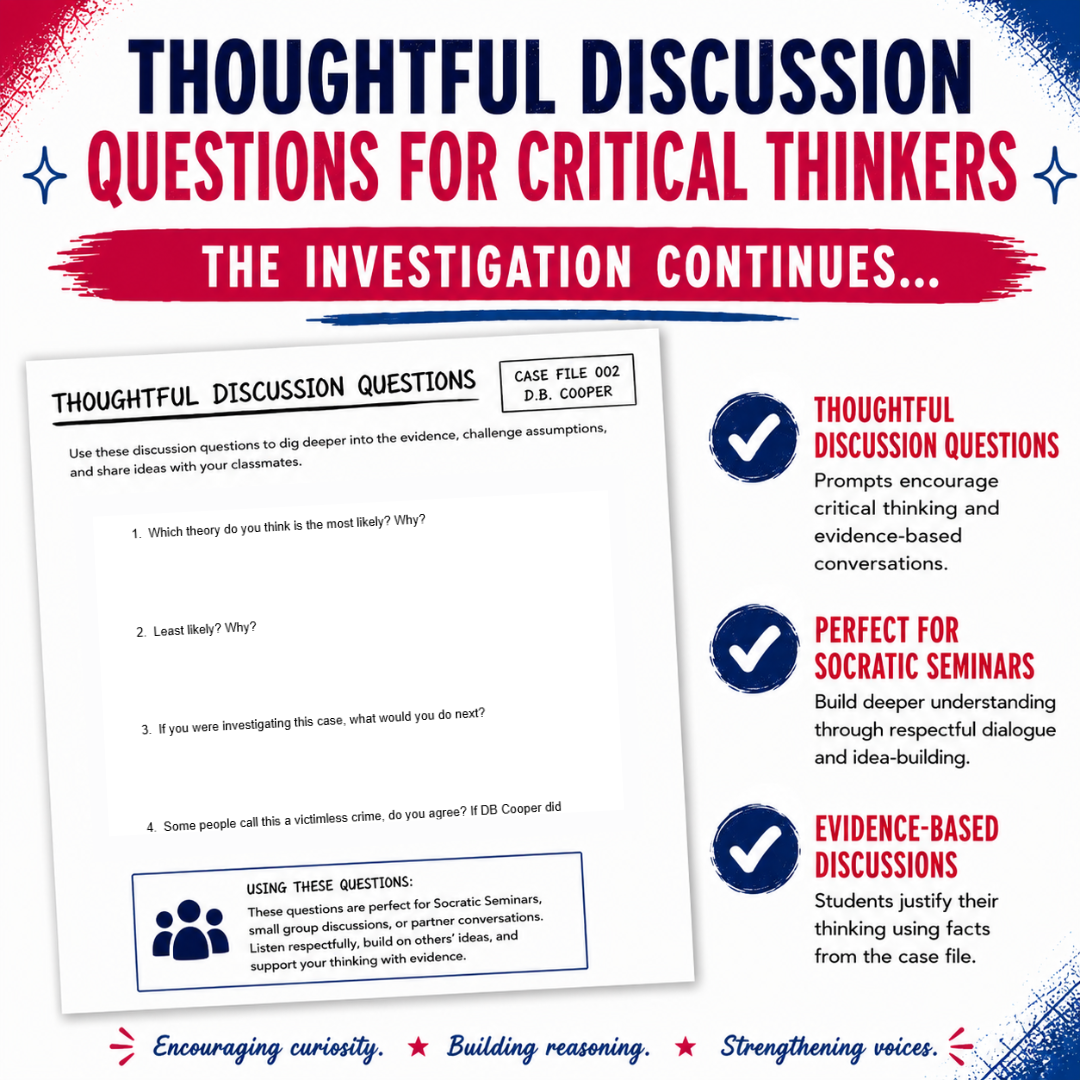
This is one of my favorite Socratic Seminar topics.
Everyone has a theory.
And usually?
They are supported by real evidence students have analyzed, questioned and debated throughout the investigation.
The case file materials make it clear: There isn't a single "correct" answer—which is exactly why the discussions become so engaging. Students quickly discover that every suspect explains some of the evidence...but none explains all of it.
Click the arrows to see more of what’s inside.
Imagine you’re a prison guard arriving at work one morning only to discover that three of America's most dangerous prisoners have vanished from their cells.
No alarms.
No witnesses.
No bodies.
Just three dummy heads—complete with real human hair collected from the prison’s barbershop—lying in their beds, convincing enough to fool the night guards until morning.
What could have possibly gone wrong?
That was exactly what happened at Alcatraz in June of 1962.
More than sixty years later, investigators are still asking the same question:
Did Frank Morris and brothers John and Clarence Anglin actually escape...or did they disappear beneath the icy waters of San Francisco Bay?
Unlike my other case files, this investigation begins before students know the story.
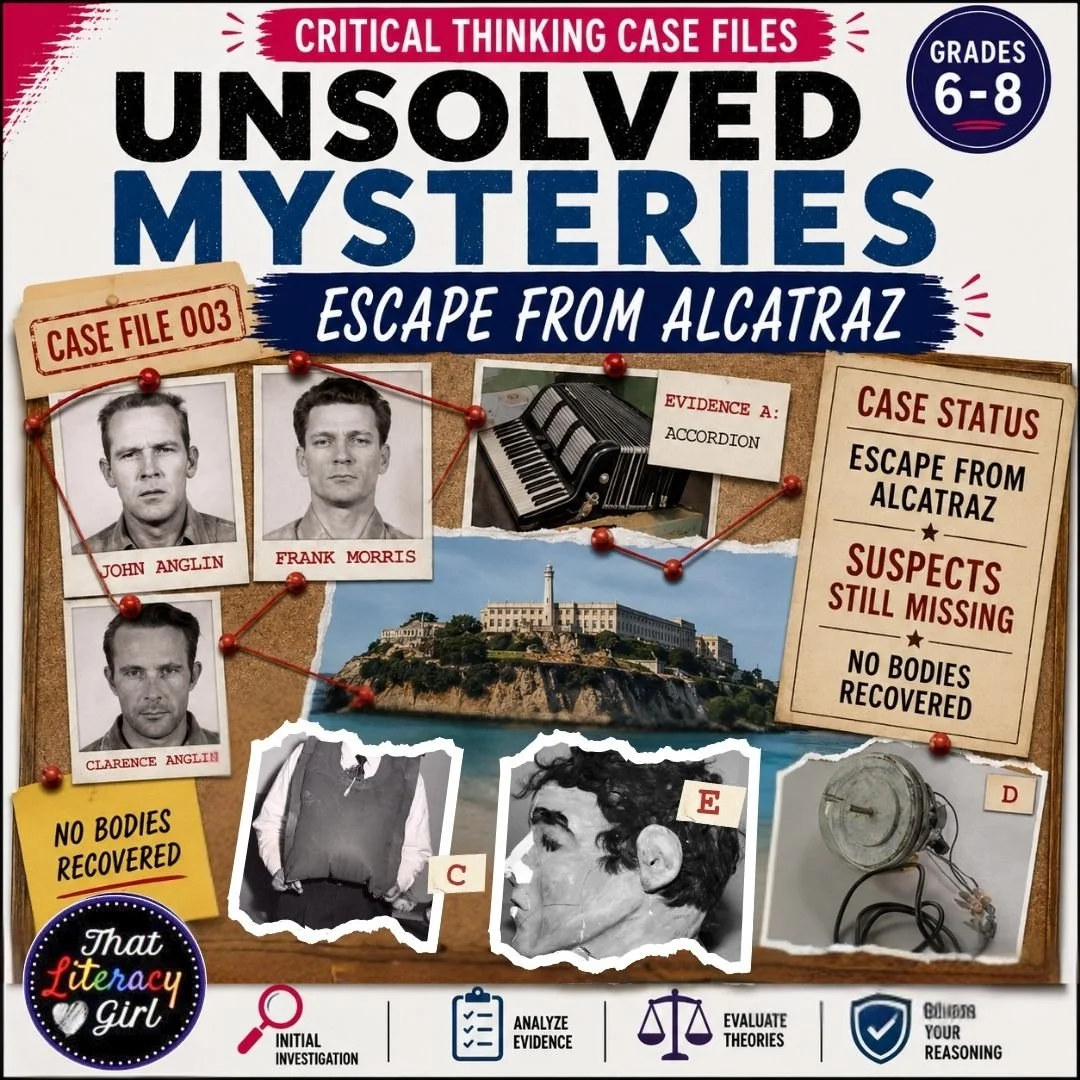
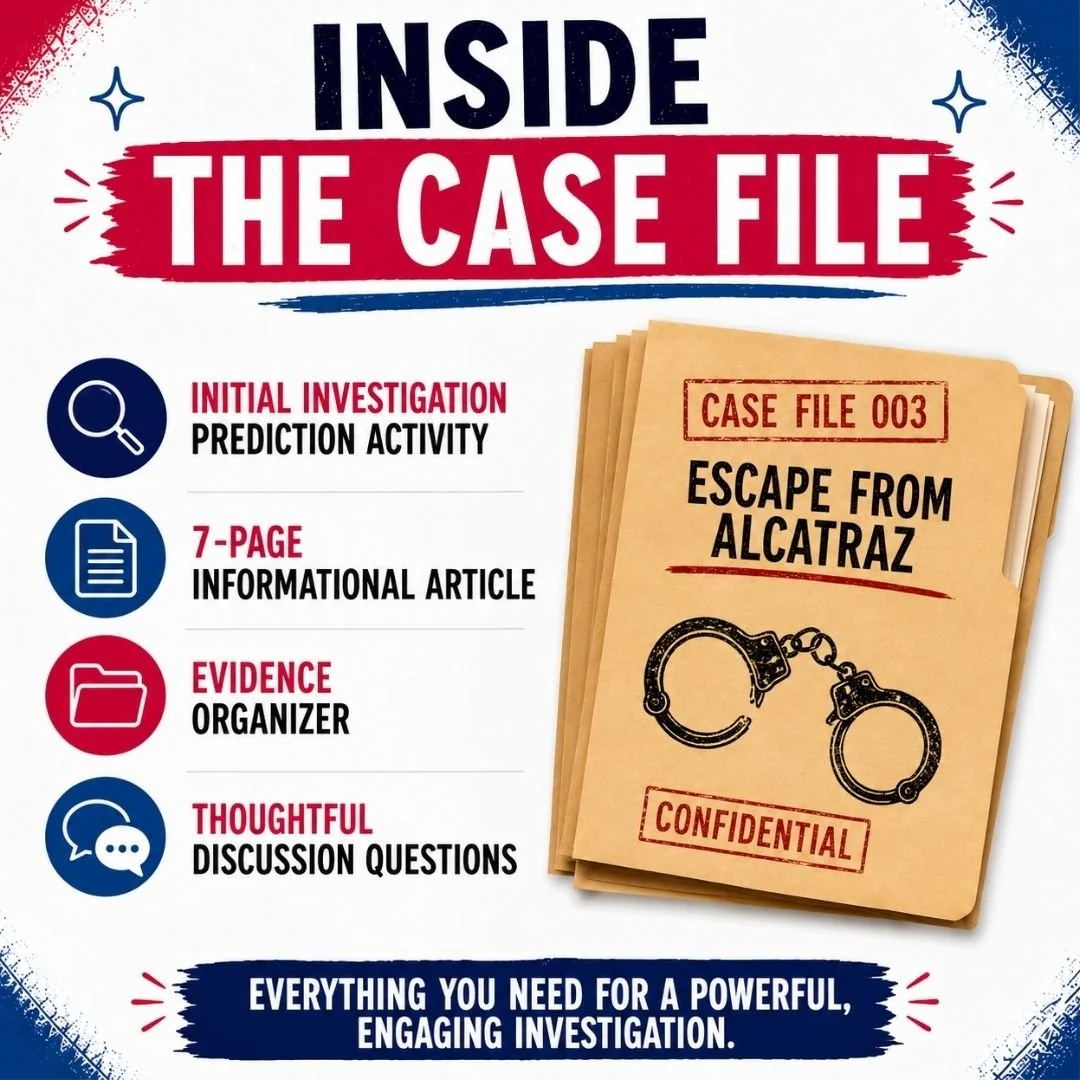
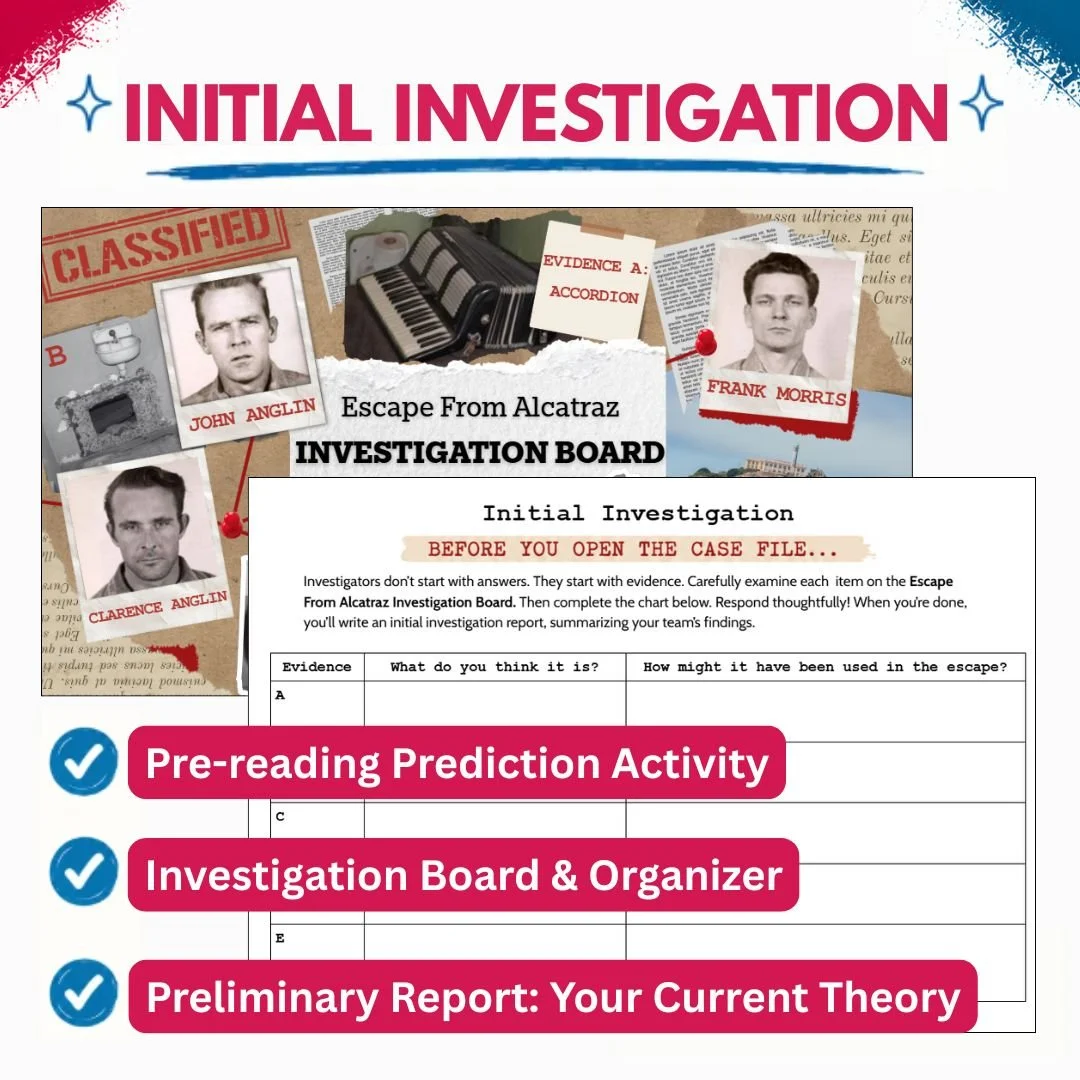
I hand them an investigation board filled with photographs, evidence, and clues recovered after the escape.
A homemade drill.
Life vests stitched together from stolen raincoats.
The infamous dummy heads.
Photographs of Alcatraz Island.
Without any background information, students work together to reconstruct what they think happened.
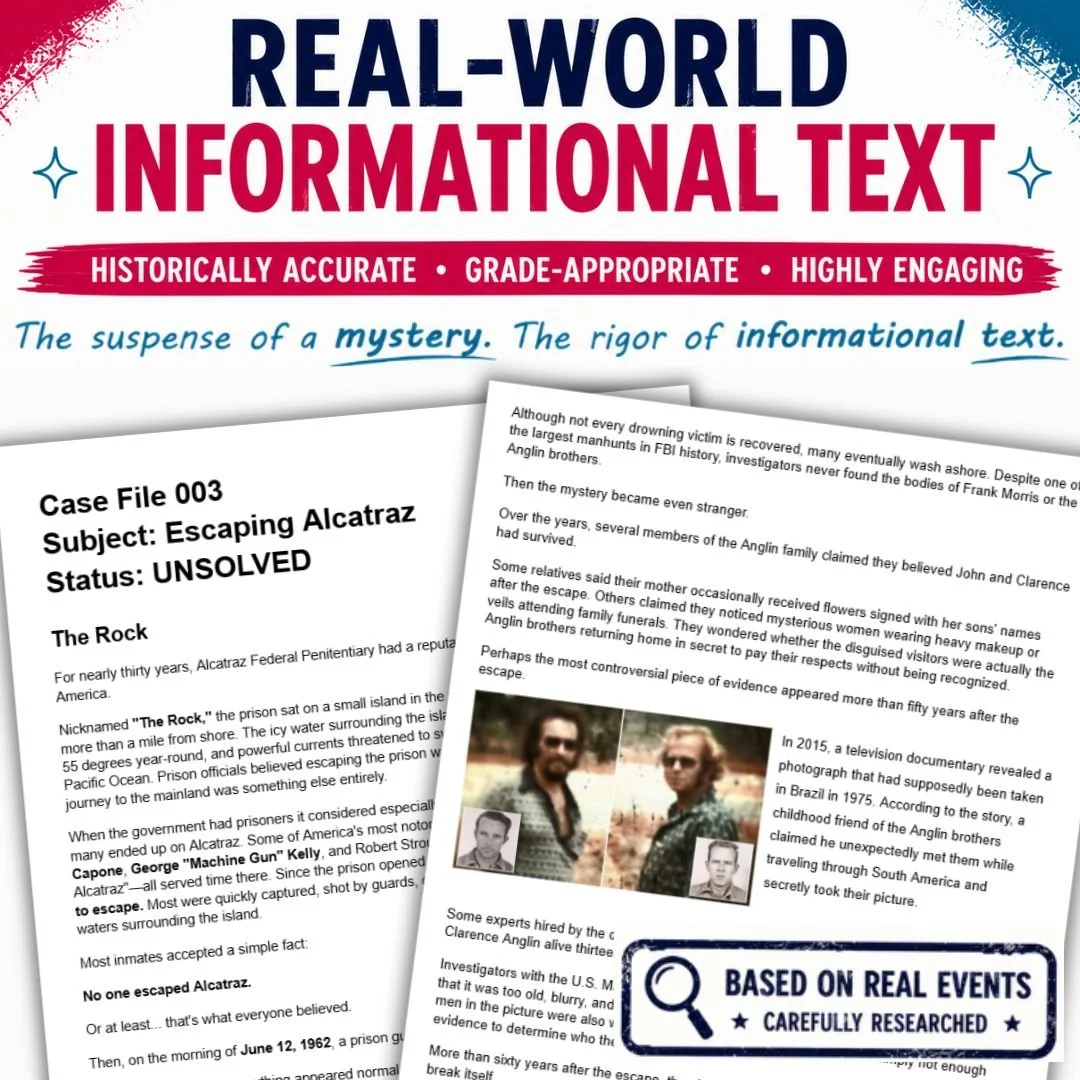
Only then do they read the case file and discover how remarkably close—or wildly wrong—their theories were.
By the end of the investigation, students aren't just learning about one of history's most famous prison escapes.
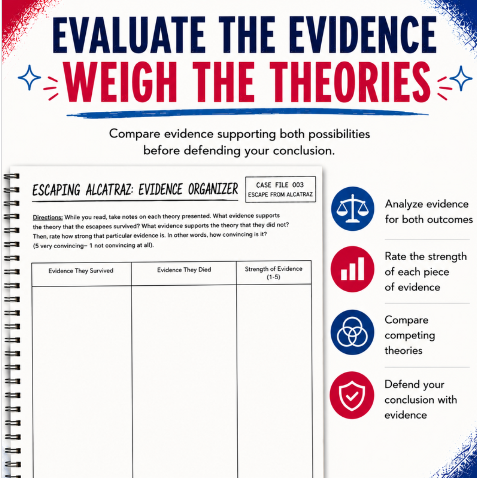
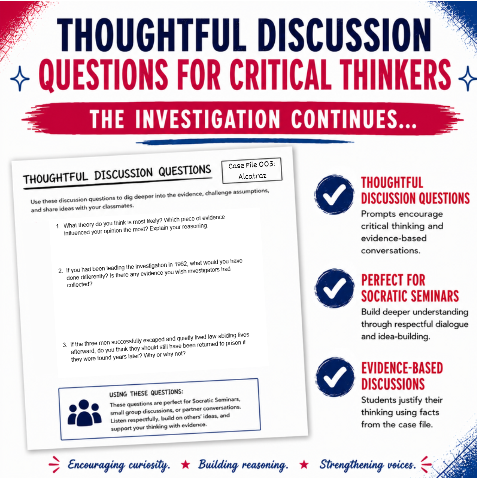
They're debating whether the prisoners beat one of the most secure prisons in America...or whether the evidence points to a more sinister ending.
The best part?
The evidence in the case file could really be interpreted either way.
After all, the world’s best investigators still aren’t sure what really happened.
More Than Just a Mystery
That's one of my favorite things about teaching unsolved mysteries.
Unlike most history lessons, the ending hasn't been written yet.
Who knows?
Maybe one day investigators will finally solve one of these mysteries.
And if they do, I hope my students are paying attention.
They may just be able to look back, smile, and say,
"I told you so."
