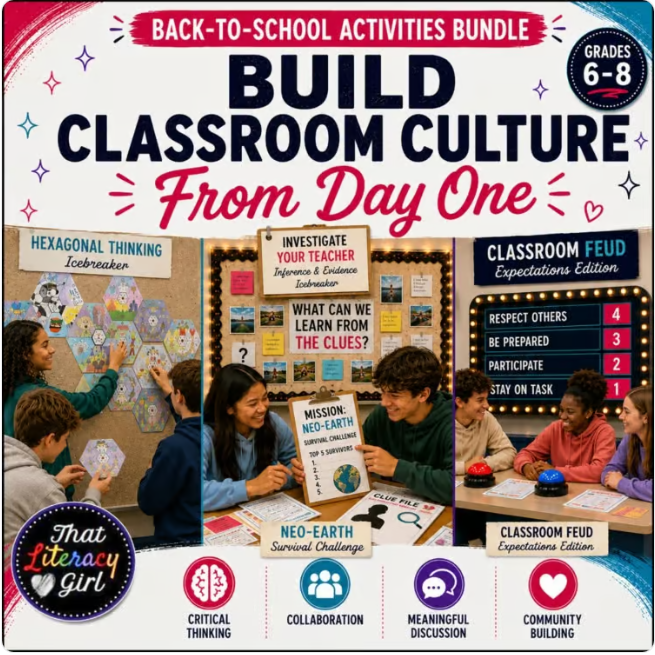
4 Back-to-School Activities That Build a Community of Critical Thinkers
Every teacher wants a classroom where students think deeply, challenge ideas respectfully, and support their opinions with evidence.
But those habits don't magically appear in October.
They're built during the first week of school.
And only if we’re intentional about the activities we choose on Day 1.
That’s why it’s so important that those first few days go beyond name games and bathroom expectations.
Here are the four activities I use to begin building a community of critical thinkers from day one.
1. Build Critical Thinking
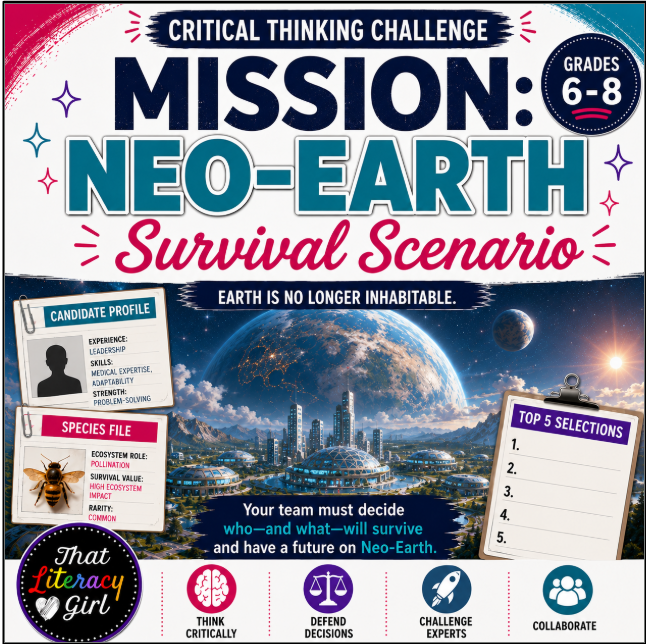
In Neo-Earth, students must decide which five people, five species, and five technologies deserve a place on humanity's new home planet.
There isn't one obvious answer.
Every decision involves tradeoffs.
Students debate.
Defend.
Question.
Change their minds.
Then comes my favorite part.
The expert rankings appear.
But instead of the discussion ending there…
It begins.
Students are invited to challenge the experts, defend their reasoning, and even earn bonus points for convincing arguments.
On the very first day of school, students learn that my classroom isn't about guessing the “right answer”
It's about building arguments worth listening to.
2. Build Community Expectations
The last thing I want to do on the first (or second) day of school is lecture students on expectations— especially my middle schoolers who have heard it all before.
That said, it is necessary to establish what is and isn’t acceptable in your classroom right away.
But how do you do that without putting students to sleep?
By channeling your inner Steve Harvey, of course!
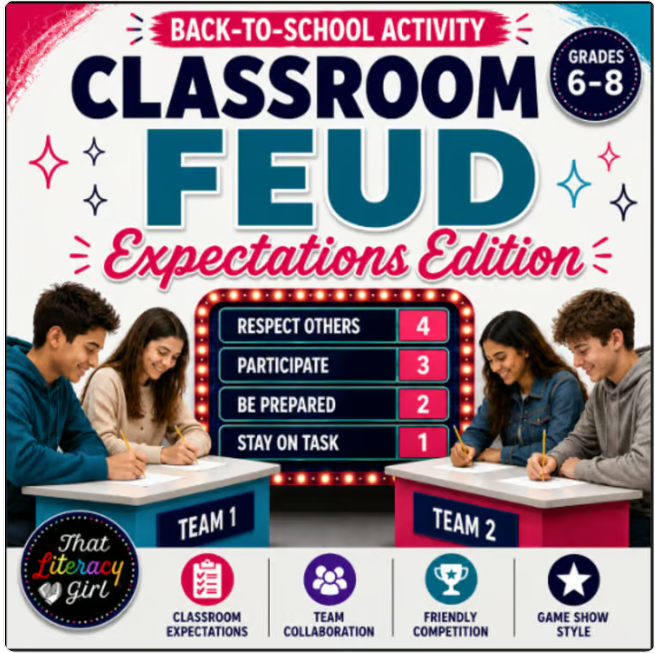
In Classroom Feud, students work in teams to predict your top expectations in a variety of classroom situations—from entering the room to participating in discussions and completing independent work.
As students compete to predict your top answers, you’ll have natural opportunities to explain, clarify, and emphasize the expectations that matter most in your classroom.
3. Build Curiosity
Introducing yourself is fine.
But it’s certainly not as fun as making students draw (and defend) their own conclusions.
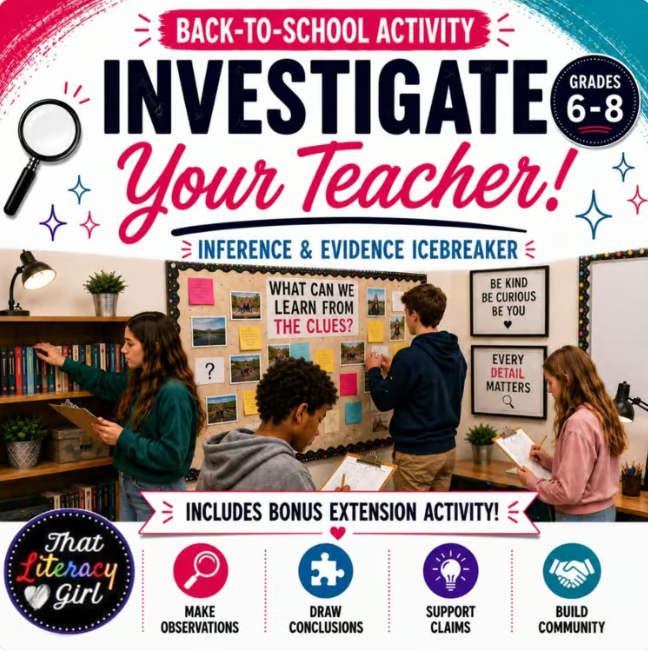
Investigate The Teacher works best in classrooms that tell a story—ones filled with Ravenclaw posters and family photos. Ones decorated with stickers and magnets and crocheted pickles wearing crocheted hats. (He’s our class mascot. His name is Gambolina).
If your classroom showcases your personality, ask students to start investigating.
What claims can they make about you from what they find around your classroom? And how will they defend those claims?
I don’t mean things like “She likes to read because she has a lot of books.” But more meaningful observations like, “He has a great imagination because he’s been to the big foot museum and published his own fantasy novel.”
Without realizing it, kids practice the exact thinking skills they'll need later for literary analysis, argument writing, and investigative research: proving a claim with evidence and reasoning.
Plus— it’s hysterical to see what correct and incorrect assumptions your students make about you that first week.
4. Build Creativity and Connections
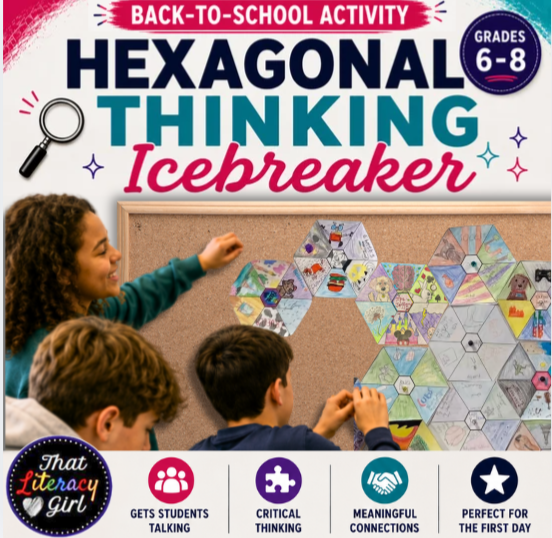
My very favorite first week of school activity is my Hexagonal Thinking Icebreaker.
Students complete a “Six Sides of Me” hexagon by illustrating different aspects of their identity—no words allowed! I immediately learn who my artistic students are and who thinks stick figures are asking too much.
I also learn important aspects of my students’ identity from the pictures they choose to represent themselves.
But my favorite part is what comes next.
Once all hexagons are finished, students collaborate to share their creations and find similarities among themselves and their classmates.
Hexagons are placed side-by-side based on shared traits, creating a visual web of connections across the classroom floor.
Because connections aren’t always obvious, students must:
✔ justify their reasoning
✔ think creatively
✔ communicate clearly
✔ be willing to share their ideas, both serious and silly.
In the end, you can display the connected hexagons on the classroom wall— a reminder of students’ shared experiences, interests, and identities. A powerful reminder that they are part of a community bigger than themselves. ✨
The Bigger Goal
I’m not trying to teach students what to think.
I’m trying to teach them how to think.
Everything we do throughout the year—whether we’re analyzing literature, arguing a mock trial, pitching a business idea, or investigating an unsolved mystery—depends on the same habits:
✔ Ask thoughtful questions.
✔ Support your thinking with evidence.
✔ Listen respectfully.
✔ Change your mind when the evidence changes.
✔ Build on other people’s ideas.
Those habits don’t appear overnight.
They’re built through hundreds of conversations…
starting with the very first one.
_____________________________________
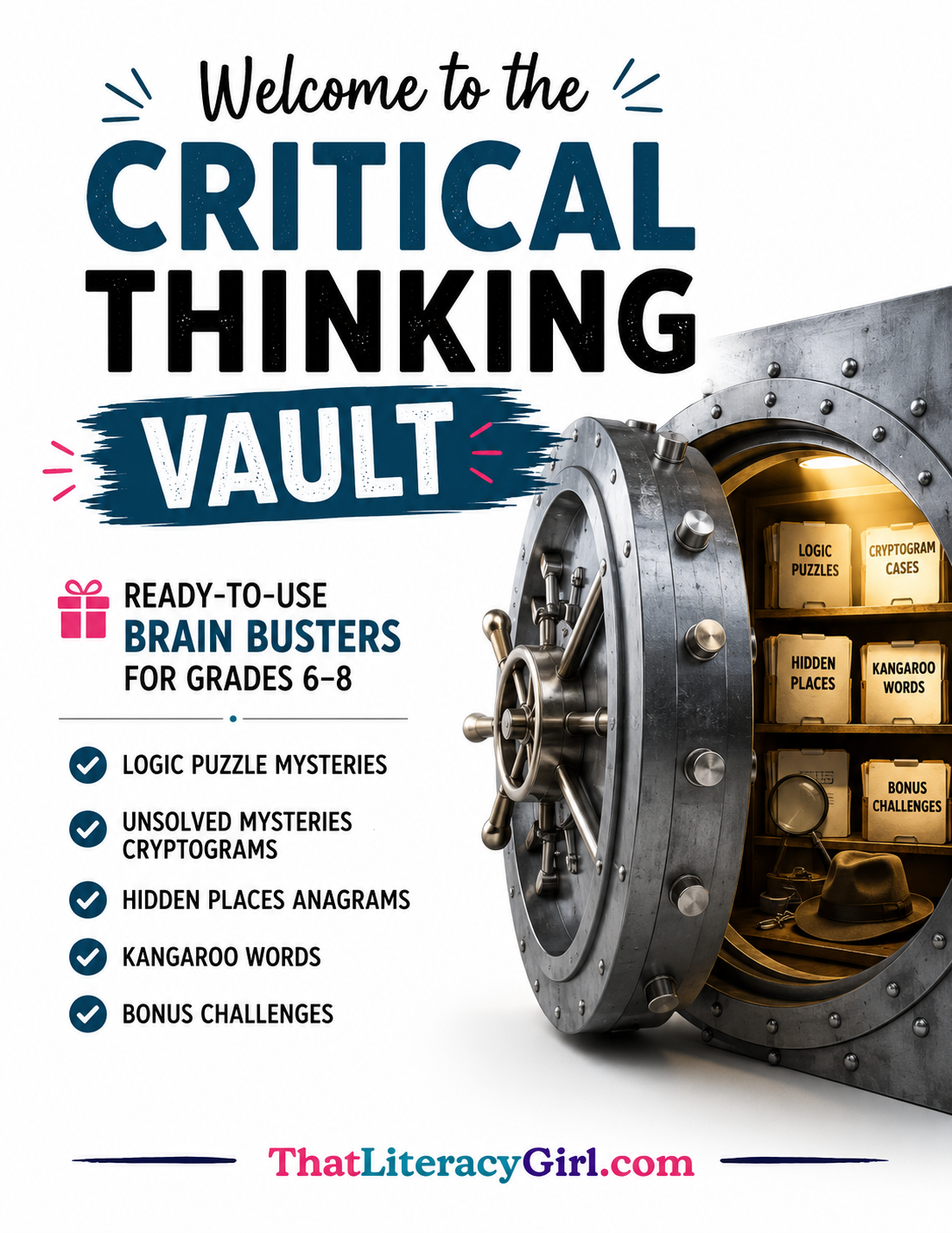
If you're looking for quick, ready-to-use activities that keep students thinking all year long—not just during the first week—I created something just for you.
🎁 The Critical Thinking Vault is my FREE collection of classroom-ready brain busters for grades 6–8.
Inside you'll find:
✔ Museum of Mishaps Logic Puzzles
✔ Unsolved Mystery Cryptograms (Cryptids, Crimes, & Criminal Investigations)
✔ Hidden Places Anagrams
✔ Kangaroo Words Challenges
✔ Bonus challenges
They're perfect for:
✔ Bell ringers
✔ Early finishers
✔ Brain breaks
✔ Enrichment
✔ Indoor recess
✔ Those unexpected extra minutes when you still want meaningful learning to happen
👉 Get access to The Critical Thinking Vault here.