Why I Stopped Using Lost in the Amazon (And What I Use Instead)
Everything changed when I stopped telling students they were wrong and started asking why they were right.
The Back-To-School Activity That Almost Got It Right
For years, my favorite first day of school activity was “Lost in the Amazon.”
If you’ve never played, the premise is simple. Students imagine they've crash-landed in the Amazon rainforest with a limited number of survival items. Working in teams, they rank each item from most to least important, debating everything from machetes to mosquito nets as they try to build the best possible survival plan.
It’s a great way to get students talking, debating, and thinking critically on day one. It sets the expectation that your classroom is a place for collaborating and sharing ideas.
The problem?
At the end of the activity, you reveal the best rankings according to the “experts,” and students score themselves accordingly.
Whenever we got to this part, the energy would change.
Students wouldn’t debate with each other anymore.
They’d debate the experts.
“But they forgot that…”
“But that’s not fair!”
“But our idea is better because…”
They wanted to defend their choices, but the activity was over.
The experts had spoken.
I often just clapped my hands, reminded the most vocal students to lose with dignity, and awarded the highest scorers a Jolly Rancher.
For what?
Predictability?
The outside-the-box thinkers were angry. Often rightfully so.
Without meaning to, I had taught my students that the goal wasn't to build the strongest argument.
It was to predict the "right" answer— to figure out what the experts—and by extension, the teacher—wanted them to say.
I needed a first-day activity that sparked the same quality of discussion while giving students permission to challenge the answer—but only if they could support their counterclaim with evidence and reasoning.
Besides—I figured the Amazon thing has been done a million times. I wanted a survival challenge that felt fresh and exciting to kids.
I wanted an activity where the experts weren't the finish line.
They were simply another voice in the conversation.
I wanted disagreement to be part of the learning—not the sign that learning was over.
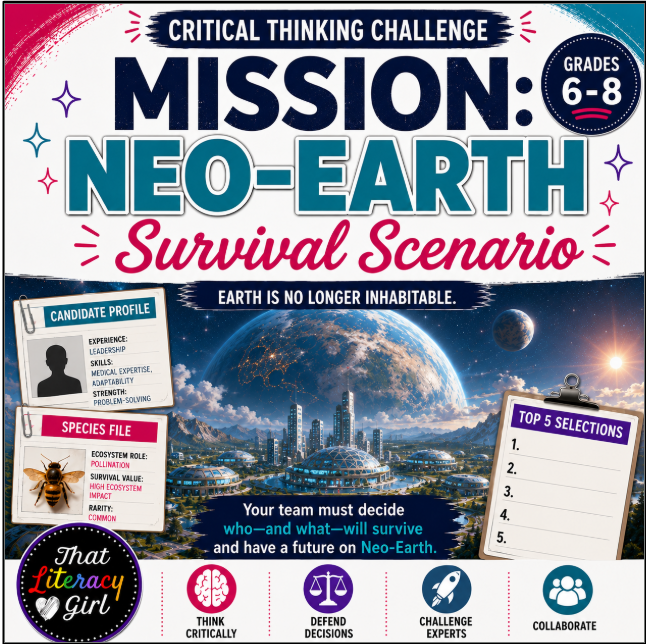
That’s why I designed Neo-Earth.
The concept?
Earth is no longer capable of supporting human civilization.
Scientists have discovered Neo-Earth, a habitable planet located in a distant solar system. However, limited space on the first colonization mission means humanity cannot preserve everything.
Students serve as members of the Neo-Earth Preservation Council, making difficult decisions about which people, species, and technologies deserve a place in our future.
Like Lost in the Amazon, students still debate impossible decisions.
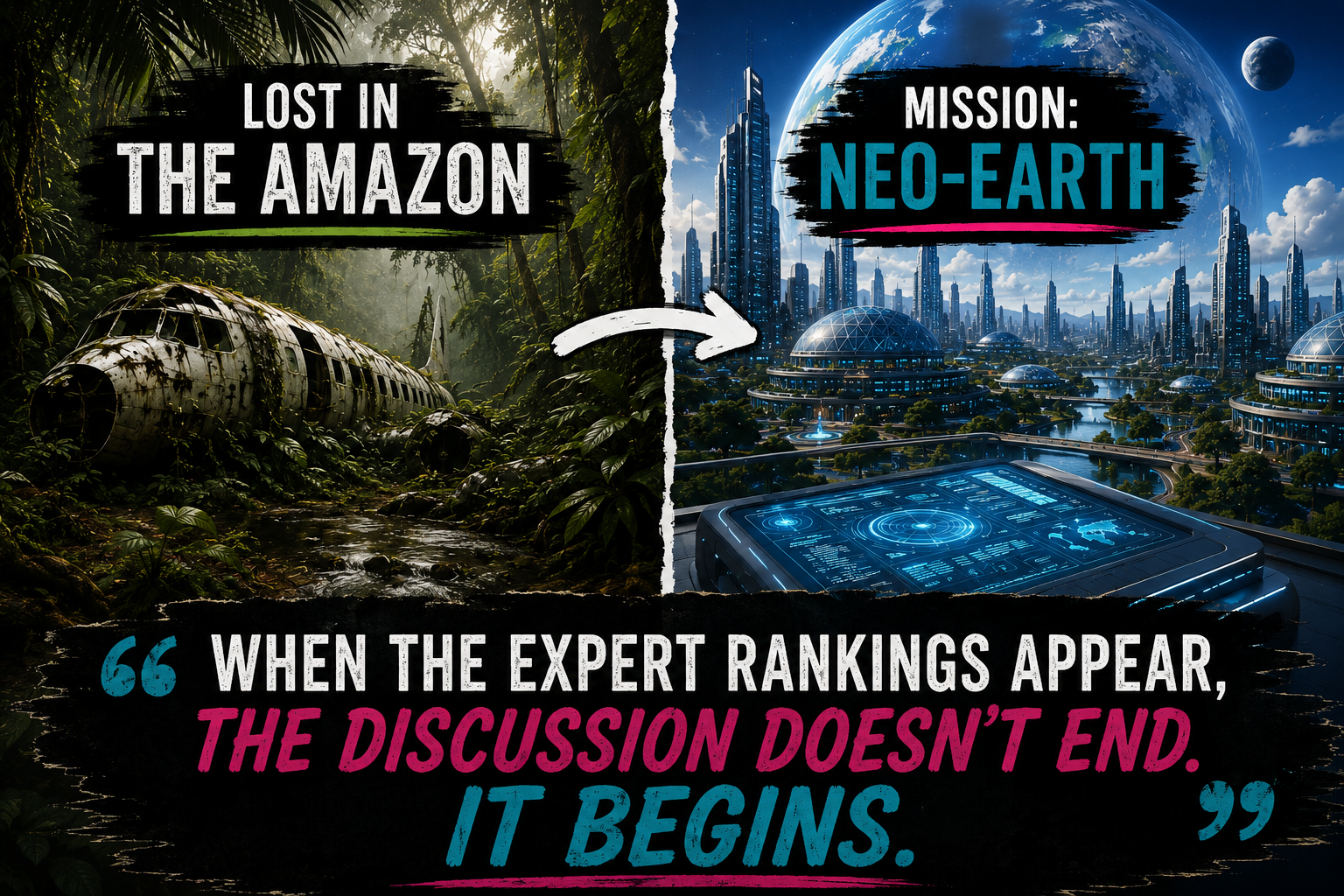
But when the expert rankings appear, the discussion doesn't end.
It begins.
Students are encouraged to challenge the experts. They can replace one candidate in the Top 5, defend their reasoning with evidence, and even earn bonus points if they make a convincing case.
What I want students to learn on the first day of school
I don't want students walking into my classroom wondering,
"What's the answer my teacher wants?"
I want them wondering,
"Can I build an argument strong enough to defend my thinking?"
Those skills are at the heart of everything I teach—
Literary analysis.
Mock trial.
Shark Tank.
Podcast investigations.
Every meaningful classroom discussion.
And from the very first day of school, my students learn that good ideas are meant to be challenged—not memorized.
Because long after students forget whether the dog ranked third or fourth on the list of species worth saving, I want them to remember this:
Being wrong isn't the end of learning.
It's the beginning of a better conversation.
You can create this kind of rich discussion with almost any thoughtful prompt, but I wanted a ready-to-go experience that would keep students debating, collaborating, and defending their thinking from start to finish. You can use it in your classroom too.