Skip the Icebreakers: 5 Authentic Back-to-School Experiences That Honor Student Identity
‘Tis the season.
Walmart smells of Crayola and kindergarten, and fresh wax glistens upon every school floor.
Some teachers race back in the building.
Others aggressively wrap themselves in a Snuggie, determined to finish their favorite Netflix series before it’s too late.
They vow not to open their phones and doom scroll because their For You Pages are full of “Two Truths and a Lie” and “Find Someone Who” Bingo games.
Ugh. Emphasis on the doom.
Icebreakers are a necessary evil, they say…. But are they?
I’m not so sure.
I don't spend the first week of school helping students remember each other's names. I spend it helping them understand themselves and each other. In fact—when it comes to name games, I skip them entirely.
Here are 5 ways I put student identity at the center of back to school season.
Hexagonal Thinking → How do students think?
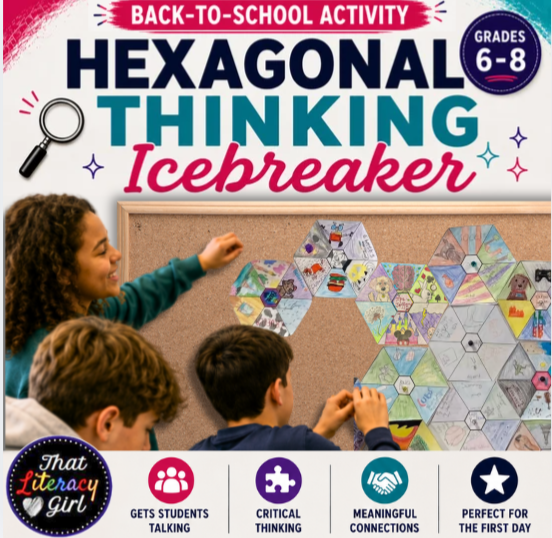
The only “icebreaker” I buy into is Hexagonal Thinking.
Students complete a “Six Sides of Me” hexagon by illustrating different aspects of their identity—no words allowed!
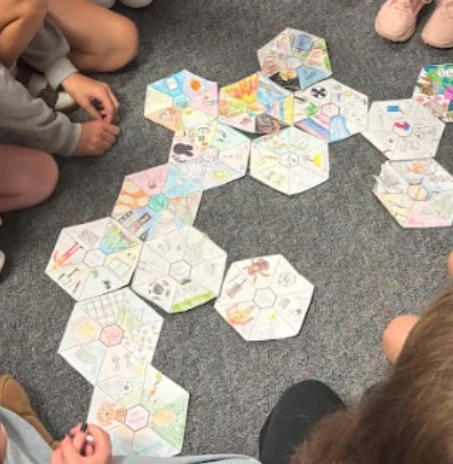
Once all hexagons are finished, students collaborate to share their creations and find similarities among themselves and their classmates.
Hexagons are placed side-by-side based on shared traits, creating a visual web of connections across the classroom floor.
Because the connections aren’t always obvious, students must:
✔ justify their reasoning
✔ think creatively
✔ communicate clearly
✔ be willing to share their ideas, both serious and silly.
.
And while they’re hard at work, my only job is to soak it all in and learn about my students…
… as artists.
… as people.
… as collaborators.
… as thinkers.
… as leaders.
2. Multiple Intelligences → How do students learn?
There’s so much value in knowing how students learn.
It changes the way I teach.
It helps me offer meaningful choices, explain difficult concepts in new ways, and recognize that not every student demonstrates understanding in the same way.
That’s why the very first unit in my 7th grade TAG literacy class is a multiple intelligences unit.
Obviously this unit is heavy on the TAG light on the literacy, so not all teachers of content have time for a complete unit.
BUT….
You can absolutely spend a few minutes talking about Gardner’s theory of multiple intelligences at the beginning of the year— asking students to predict their highest intelligences, and discussing students’ preferred means of learning.
How?
This video is 7 minutes long.
This quiz takes 10-ish minutes.
And this Multiple Intelligences Puzzle Pack can be used for bell ringers or early finishers at any time throughout the year.
I use them all year long to:
encourage students to think with all forms of intelligence
lean into their strengths
strengthen their weaknesses.
3. Tiny Memoirs → What experiences shaped them?
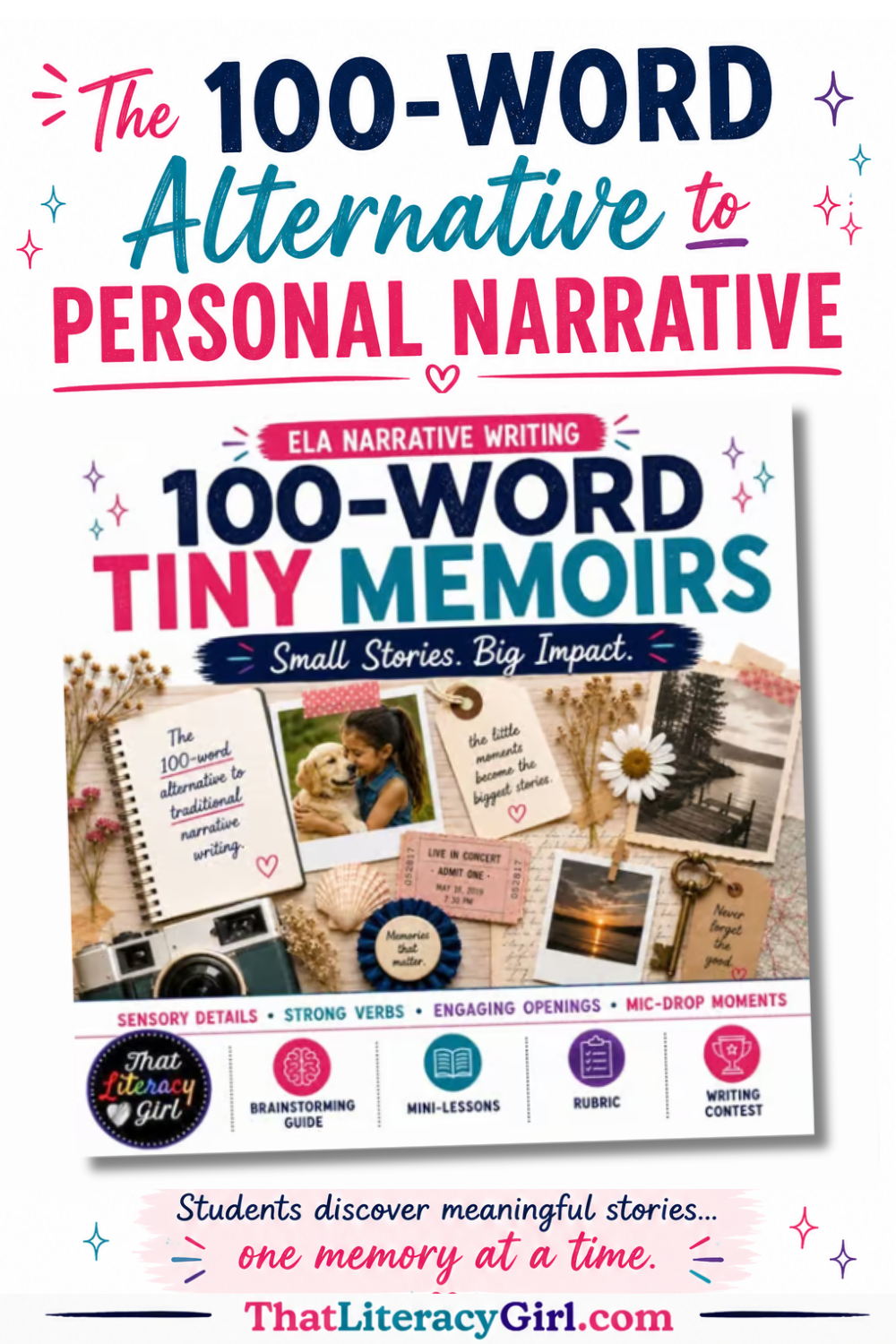
Our first literacy-focused unit is a Tiny Memoir writing contest.
I love this unit not only because it makes my students more intentional writers (it does!), but also because I learn so much about the little moments in kids’ lives that have stuck with them.
In this 100-word alternative to personal narratives, kids write about everything from…
sports games they won and lost,
games they played that were so magical they blurred the lines between imagination and reality,
stumbling upon breath-taking waterfalls when wandering a little too far,
breaking their collar bone and coming out tougher for it,
the best buffalo chicken sandwich they’ve ever had.
You get the picture.
They’re not writing elaborate 5-page narratives.
In fact, the 100-word limit forces them to find stories worth telling in everyday moments.
This encourages reflection, strengthens student voice and reveals important truths about who they are (not just as writers, but as individuals.)
4. Myers Briggs Type Indicator → What are their strengths and tendencies?
In 8th grade, I’m fortunate to have my same students again.
After 180 days of 90-minute blocks with teensy class sizes, I know them pretty well.
So back to school season in 8th grade is more about helping them get to know themselves!
Students’ first unit focuses on the Myers Briggs Type Indicator, which might sound more TAG but actually leans more literacy.
First, we learn what each of the letters stands for (Introverted vs Extroverted, Intuitive vs Sensing, Thinking vs Feeling, Judging vs Perceiving, Turbulent vs Assertive).
Wow! What a great vocab lesson right out of the gate.
Then, students take this free personality test and write a 1-2 page reflection about:
1) whether they agree with their personality type— I emphasize that online tests do not define us!
2) how they can use their strengths to support their weaknesses and be better readers, writers, thinkers, friends, and all around individuals.
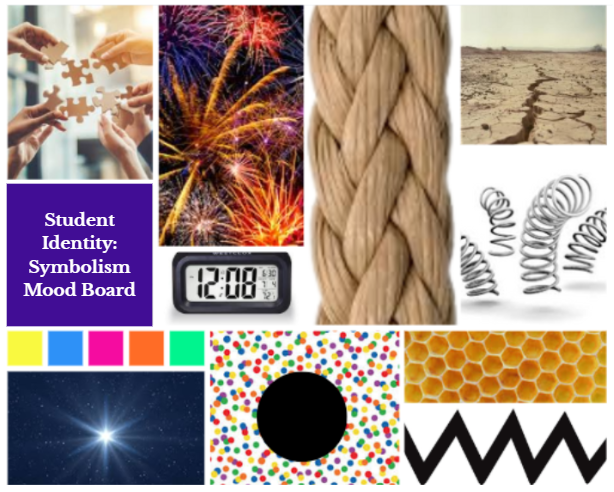
I often pair this unit with my Think Like An Author: Symbolism lesson.
After students have read an article about symbolism as its applied by Disney animators, they design a Pinterest-style mood board that symbolically represents them and present this to their classmates.
Abstract literary thinking? Check!
Speaking and listening skills? Also check!
5. Genius Hour → What do they care about enough to pursue all year?
Genius Hour is the single most impactful thing I do in my classroom and the majority of the work happens outside of the school day.
Students choose a question to explore the entire year with a goal of creating something worth sharing with their classmates in May.
It could be a passion project, a mastery project, or a service project.
This is the video I use to kick off the unit.
After that, there are a few brainstorming assignments and a “get this approved by your parents” checkpoint, but then kids are pretty much on their own.
Really— that’s the point.
To teach them how to plan a project from inception to culmination to reflection without hand-holding.
And to allow them to explore something that really matters to them and then share that with their classmates and (sometimes) the world!
Kids are capable of remarkable things when we give them the freedom to be!
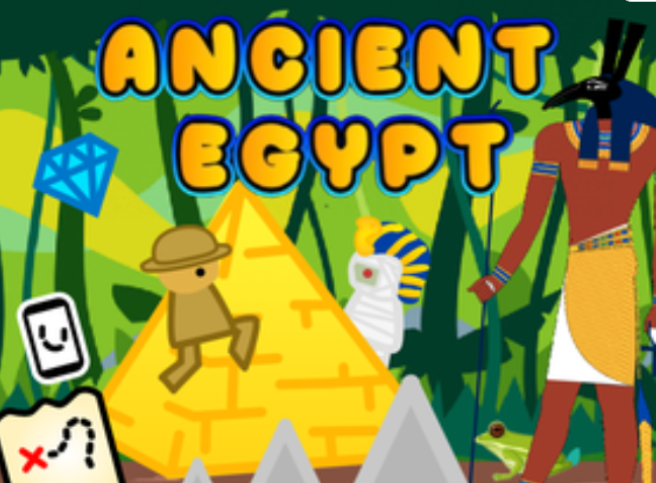
Coded an Ancient Egypt themed video game that had a “play” mode with an epic mission and a “learn” mode full of fun historical facts. The creator put more than 100 hours into building this game and was actually featured on Scratch’s website as an example of creative ways to use the platform.
Designed and built a full-sized trebuchet! This was quite an engineering feat for a 12-year-old!
Designed, built, and intricately designed a dollhouse— complete with tiny handmade books on the shelves and food in the refrigerator!
Created a coloring book with beautiful illustrations of characters inspired by endangered species in Iowa. Each page teaches readers about the species while they color. It was professionally printed by Copyworks and looked incredible— but the best part?
She partnered with the local Girl Scouts Troop to…
A) get her coloring book into their store (for scouts to take for free) and…
B) design a badge that local scouts can earn by coloring the pictures and sharing facts about endangered Iowa species with their friends.
Published several episodes of a true crime podcast to Spotify with their parents’ permission.
Learned how to crochet stuffed animals, participated in a local vendor event for kids and made more than $1,000 selling their creations!
I could go on and on and on.
You can see how these projects honor student passions and give them something meaningful to work towards beyond the classroom.
Often they end up being seen and appreciated by an authentic audience and having a genuine impact on others.
By the end of the first few weeks of school, my students certainly know each other's names.
But far more importantly...
They know who loves engineering.
Who dreams of becoming an entrepreneur.
Who processes ideas visually.
Who writes beautiful stories.
Who thrives when given independence.
Who notices the details everyone else misses.
Who gently guides conversation back on topic when kids are distracted by the six silly sides of someone’s hexagon.
