Tiny Memoir Writing: The 100-Word Alternative to Personal Narrative
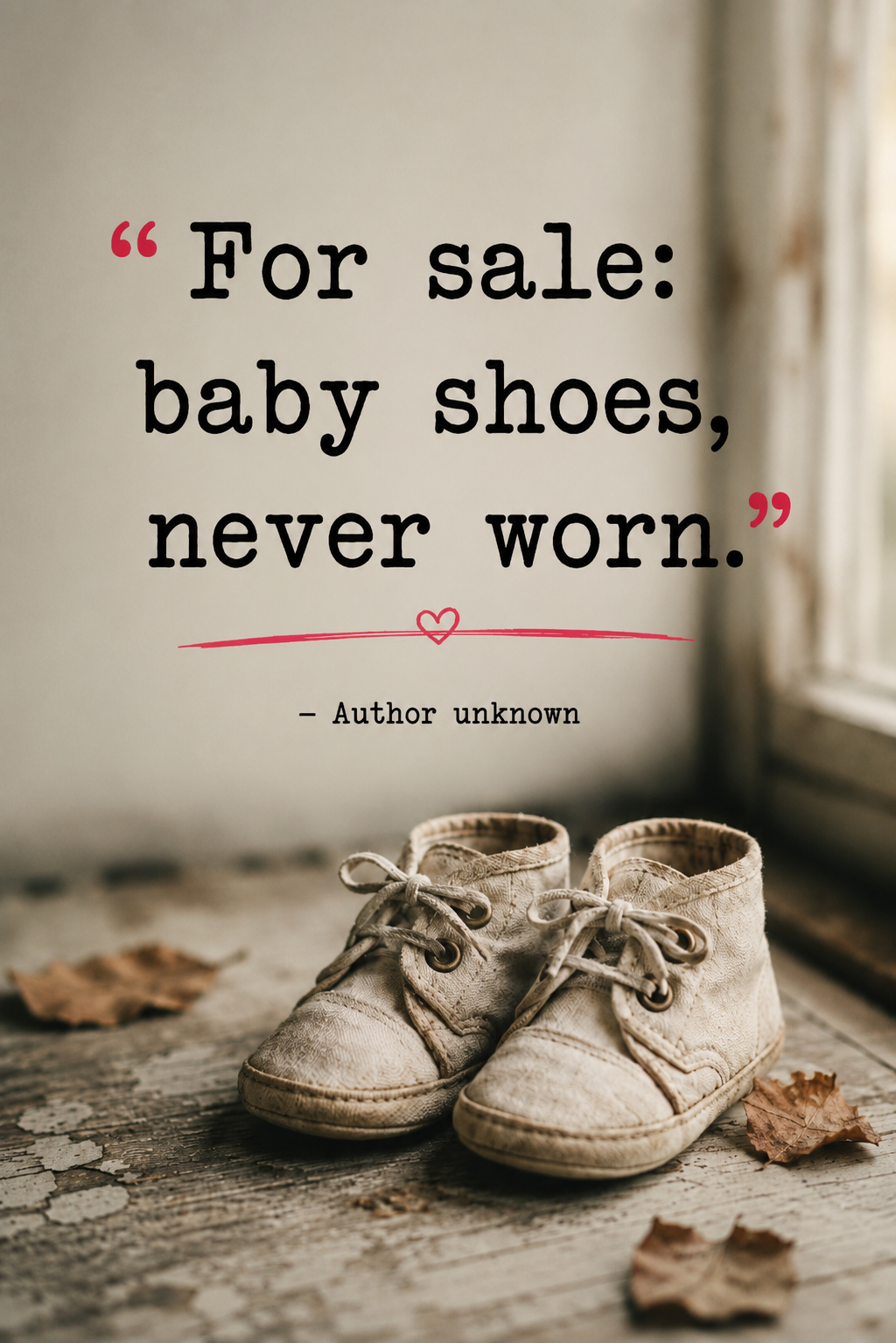
"For sale: baby shoes, never worn." – Author unknown
These six words contain no name, no backstory, no dialogue, no exposition, no explanation. Nobody’s even entirely sure who wrote them.
And yet, they pack a punch.
The words left unsaid create emotion and uncertainty.
That's the power of concise writing.
When every word matters, every word works harder.
So why are we always asking students to write more?
Add another paragraph.
Describe the setting.
Expand the conclusion.
Keep going until you've filled three pages.
After a while, students begin confusing length with quality.
In my classroom, when students ask,
“How long should it be?”
my response is always,
“As long as it needs to be to say what it needs to say.”
I want my students to discover that great writing isn't about saying more.
It's about saying exactly enough.
Why say something in 1,000 words that you could say more clearly in 100?
That's why every year, my seventh graders write tiny memoirs: true slice-of-life stories, exactly 100 words in length.
It sounds restrictive.
And in some ways it is, but those restrictions free up students’ creative energy, giving them the stamina to revise intentionally and (for the most passionate of writers) obsessively.
Once students know every word has to earn its place, they stop writing to fill space...
...and start writing to make readers feel something.
Here's what that process looks like in my classroom.
Step 1: We Hunt for Moments Worth Remembering
We start by brainstorming moments.
Not life-changing events.
Just moments.
In fact, I start by telling my students a 100-word story from my childhood (about getting published at nine years old, believing my writing career had launched and then learning I wasn’t the literary genius I thought I was…)
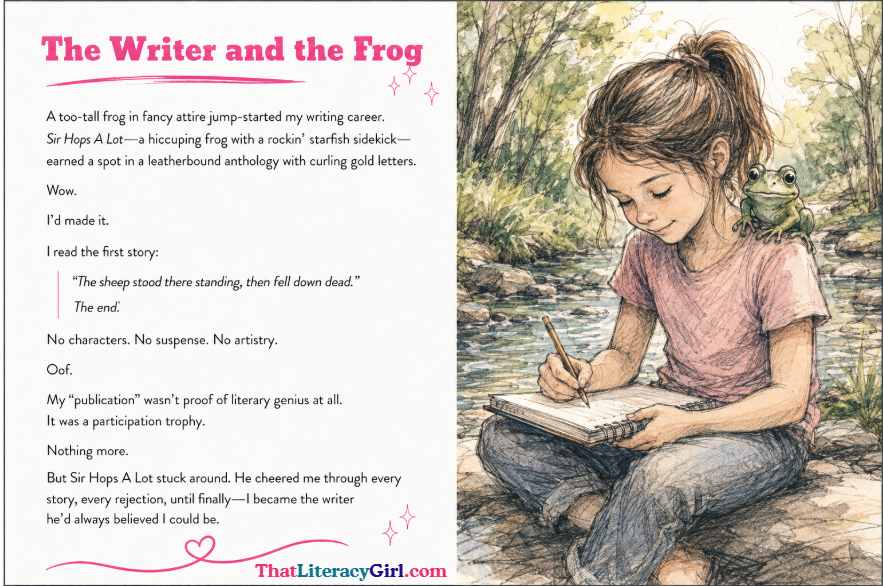
The 100-word tiny memoir I share with my students… a true story from my childhood.
I tell them this story for a couple of reasons:
It sparks a lot of memories for students of contests they’ve won (or lost), characters they’ve created, stories they’ve written, etc.
It shows students that you don’t have to have accomplished something remarkable or had a once-in-a-lifetime experience to write something meaningful
It models how small 100-words really is. This often relieves some students and overwhelms others, but it gives them realistic expectations of what size of story they’ll be drafting.
It’s a relationship-building opportunity.
(You can share my memoir with your students if you want, but there is power in telling your story. That takes vulnerability and allows students to see and know you. The anthology my story was published in sits on my whiteboard throughout the year and students often reference Sir Hops A Lot and the other stories—and when they do, we laugh together.)
After I’ve shared my tiny memoir, students share a million memories it sparks for them:
They tell me about the soccer game they almost won.
The birthday party that went horribly wrong.
The dog that escaped.
The roller coaster they were finally tall enough to ride.
The time they waited in line for hours for the world’s best brisket.
One memory sparks another.
They think they're getting me off track.
But they're actually giving everyone else ideas.
They’re inspiring one another!
And it makes for a very effective pre-brainstorm!
Next, I give them a complete brainstorming guide full of questions designed to spark even more ideas. They have exactly five minutes to respond and are encouraged to skip ones that don’t immediately speak to them. This “show up and throw up” brainstorming technique allows students to get lots of ideas on the page without getting too hung up on one versus another too early in the writing process.
Step 2: Students Discover That Small Stories Still Need Big Stakes
We talk about the “Somebody wanted but so then” formula that we reference all year in reading and in writing.
Who is your main character?
What does your main character want to accomplish?
What is getting in their way?
So what do they do about it?
Then, how is the story resolved? (For better or for worse– resolutions are not the same as happy endings!)
But is there time for all of that in a tiny memoir?
Mostly, yes.
I show my students several examples that manage to include each of these components.
But not every tiny memoir includes them all.
While conflict usually gives a story purpose and makes it worthwhile, stories that lack a distinct conflict can still work if they contain suspense or drama.
Ultimately—motivation, conflict and tension are what make a story shine.
After we’ve established what a story is, we’re ready to discuss how authors bring stories to life.
Step 3: We Slow the Story Down
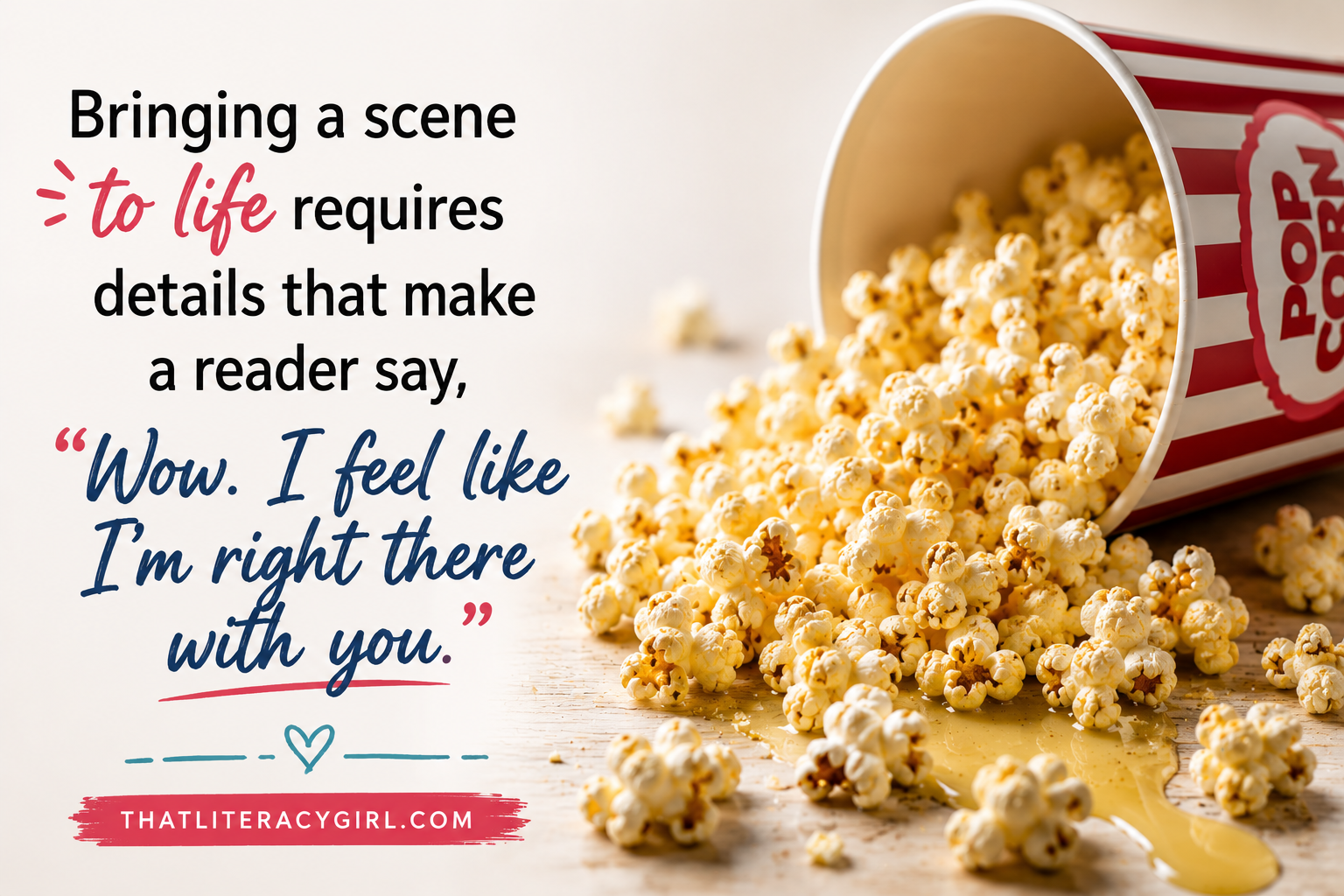
After listing the five senses, I ask students to come up with as many sensory details as they can think of to describe popcorn.
Often, they say things like yellow and fluffy, but when pushed for more, they begin to describe the wet feel of mushy popcorn smushed on the surface of their teeth, the ooze of greasy butter as they crunch into a bite-sized cloud.
They realize that bringing a scene to life requires details that make a reader say, “Wow. I feel like I’m right there with you.”
Step 4: We Skip the Boring Beginning
Often, getting started is the hardest part.
I show students several examples of tiny memoirs with strong openings and encourage them to identify what makes those openings strong.
A few strategies are to begin with a vivid description, dialogue, or onomatopoeia.
A mustis beginning in the middle of the action. There’s no time for a slow exposition in 100 words.
Step 5: Every Story Needs a Mic Drop
Ending your story on a mic drop moment can be difficult—especially if you haven’t truly identified the purpose of your story. The “so what?” The theme. The reason the story exists.
I share several 100-word memoirs with effective endings and ask students to determine the author’s purpose in each one.
Then, they consider how the closing sentence (the mic drop) served to emphasize that purpose.
For each of these topics, I like to do a mini-lesson and then a creative quick-write to practice the skill. My tiny memoir unit includes instructional slides and prompts for each of these mini-lessons, but another great resource for writing prompts is WeWillWrite.com. (If you’re not doing this with your students, you should definitely check it out!)
Step 6: Then We Start Cutting
After that first draft is on the page, we talk about the importance of keeping our writing clear and concise.
Students often think, “Oh no. My first draft is 200 words; I’ll never make it to 100.”
To which I think—”You only have to cut 100 words? That’s light work! Let me show you the tricks of the trade.”
I give students a handful of sentences and challenge them to rewrite them in the fewest possible words without losing anything essential to the meaning. They work with partners or in small groups to do this and share their answers aloud with the class.
The discussion this inspires is lively and thoughtful.
When students are motivated to win, they are motivated to find flaws in other people’s work—arguing over whether or not their opponents really captured the true essence of the sentence when they cut that one particular word.
Was it crucial?
Would the audience still interpret the sentence the same way?
Students start analyzing the value of every word and what it does or doesn’t add to a sentence.
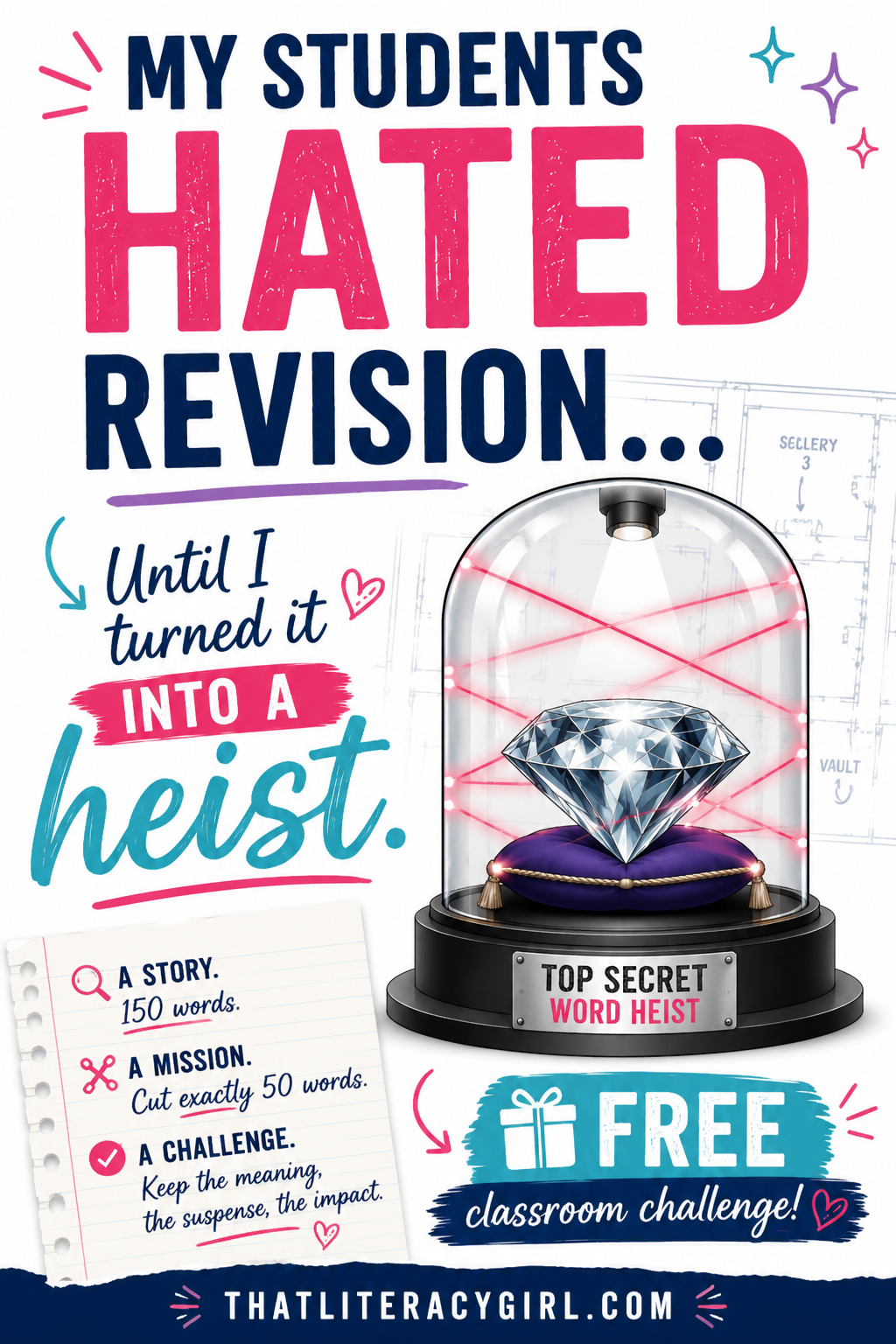
Another conciseness challenge I LOVE is my Hundred-Word Heist!
Can your students steal 50 words from a 150-word story without getting caught?
They must preserve the beginning, middle, and end, sensory details, suspense and emotional impact, but cut the fluff!
I also give students a reference sheet called 12 Tips for Cutting Words, full of helpful hints that guide them along the way. This guide is included in my Hundred Word Heist download, so you can grab it for free!
Step 7: We Obsess Over Verbs
Part of revising a story this size is obsessing over verbs.
Students learn how to replace weak verbs with stronger ones.
Not because "verbs" will be on their next grammar test (although—in my classroom, they will!)
But because students suddenly realize one perfect verb can often replace three, four, or even five ordinary words.
Suddenly, walked clumsily like he was dizzy isn't good enough anymore.
Students want staggered.
Wobbled.
Lurched.
One precise verb often replaces an adjective, an adverb, or an entire sentence worth of fluff.
Step 8: We Polish
When students think they’re done, I also give them self-assessing and peer feedback resources. It may sound like a lot, but students have the energy for it because they haven’t wasted that energy on a 5-page narrative about everything they remember about their childhood.
When we ask students to write less, we're really asking them to think more.
They become intentional.
They revise.
They debate every verb.
They celebrate every sentence.
And somewhere between the brainstorming guide and the Hundred-Word Heist...
they stop trying to write longer stories and start trying towrite better ones.
And then?
Step 9: My favorite part—We celebrate!
Our unit culminates in a class writing contest, where students finally get to experience something nine-year-old Morgan felt when Sir Hops A Lot appeared in that leatherbound anthology:
"Wow. I’ve made it."
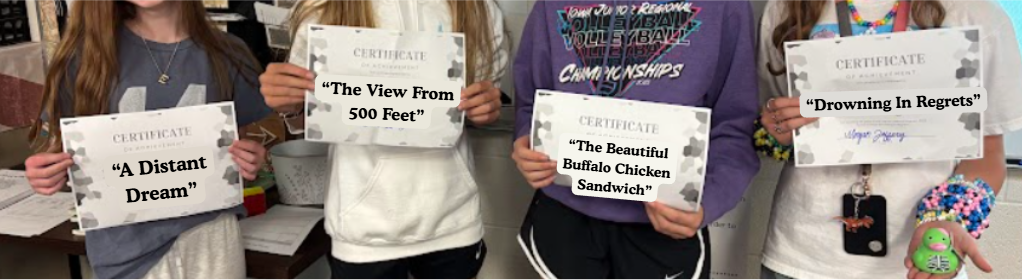
If you'd like to recreate this experience in your own classroom, I've bundled everything we use—from brainstorming to crowning winners—into my Complete Tiny Memoir Unit. It is a great first writing activity at the beginning of the year and a perfect opportunity to show your students that their stories matter!
My Complete Tiny Memoir Writing Unit Includes…
✓ Instructional Slides
Engaging opening mini-lesson
Engaging closing mini-lesson
Sensory details mini-lesson
Strong verbs mini-lesson
Mentor texts
