Why I Start Narrative Writing with Just 100 Words:Writing builds fluency. Revision builds effective writers.
Writing builds fluency. Revision builds effective writers.
Everything I know about writing I learned from a frog–
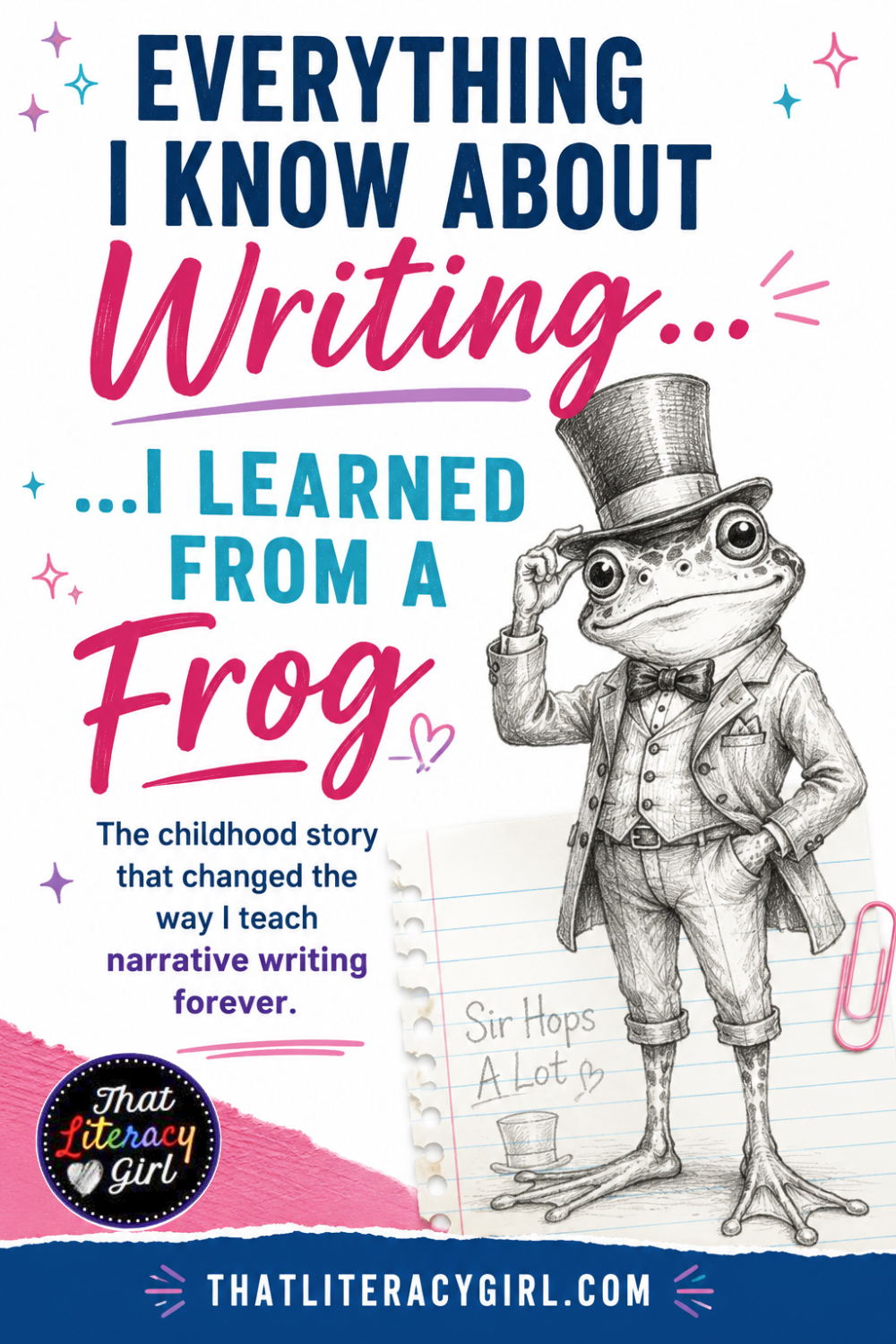
Meet Sir Hops A Lot, a too-tall frog who wore a top hat and couldn't stop hopping—or hiccupping.
I breathed literary life into him when I was just nine years old.
And I knew I’d created something great.
One evening the phone rang, confirming my suspicions.
My mom answered, smiled, and covered the receiver with her hand.
“Morgan…” she whispered. “Your story got published.”
Wow.
Just like that, I was a writer.
Or at least… I thought I was.
Until my copy arrived.
Some stories in the anthology (all written by children) were only a few sentences long. Some barely had punctuation. Others wandered aimlessly and ended abruptly.
The realization hit me like a punch in the gut…
They hadn’t published my story because it was exceptional.
They had published the stories of everyone who’d submitted.
My publication credit was a participation trophy.
Ouch.
I still thought it was the best story in the collection, though—Mine had more characters, more conflict, more scenes, more pages. Surely that made it better, right?
Years later, I dusted off that old anthology and read Sir Hops A Lot again.
It was… not extraordinary.
In fact, it wasn’t even one story.
It was two.
First, Sir Hops A Lot couldn’t stop hopping. And because he was so tall, he was bumping his head on everything. Clever, right?
But once that conflict was resolved, he developed an entirely new problem: relentless hiccups.
Nine-year-old me thought I had written an epic.
Actually, I’d stitched together two totally underdeveloped stories.
Fast forward to years later when I entered my first flash fiction contest.
The challenge sounded simple enough: write a complete 1,000 word story in 48-hours using a random genre, location, and object.
My prompts?
A drama.
A bus.
A kettlebell.
What I wrote was trash (Seriously, it made Sir Hops A Lot look like a masterpiece).
The judges weren’t impressed either.
I earned zero points and didn’t even crack the top half of my group.
But I learned far more from that 1,000-word catastrophe than from a well-intentioned publisher (and my mom) putting Sir Yaps A Lot on a pedestal.
(Seriously—Sir Yaps A Lot might have been a better title. It was long-winded and full of silly frog puns.)
But my dramatic kettlebell on a bus story was the first time strangers (the judges and other writers in the forum) were telling me my story wasn’t working.
Even better? They were telling me why.
Instead of quitting, I became obsessed.
I devoured their comments.
I studied winning entries.
I analyzed feedback left not just for me, but for others.
When the next round arrived, my prompts were horror, a yoga studio, and a box of raisins.
My mission and my mindset were different this time.
I wasn’t just trying to finish the challenge anymore.
I was determined to write a winning story.
Why?
Because I had become obsessed with the puzzle of saying more with less.
I rewrote the opening.
Experimented with dialogue.
Combined sentences.
Deleted paragraphs I loved.
Debated word choices with my forever editor (thanks, Dad).
Reread each word aloud until every sentence rolled off the tongue like poetry.
By the end, I knew every word by heart.
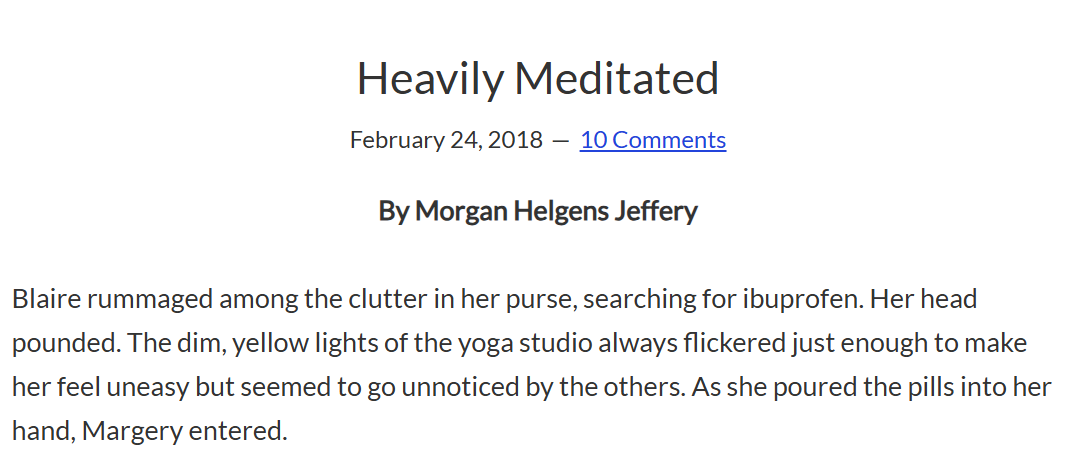
My first flash fiction publication after learning to embrace revision instead of simply writing more.
“Heavily Meditated,” won its round and was later published on flashfictionmagazine.com, but it wasn’t because I’d packed more plot into the 1,000 words.
It was because I had learned the art of restraint:
identifying exactly what my 1,000 words needed to say, polishing them until they said it well, and resisting the urge to say more.
Finally, I’d written something that resonated with readers.
Was it perfect?
Absolutely not.
Was it effective?
Yes.
This realization didn't just change the way I wrote and revised my own work.
It changed the way I teach narrative writing.
Students don’t become stronger writers by filling more pages.
They become stronger writers by making smarter decisions.
Don’t get me wrong— longer writing assignments absolutely have their place.
But when the goal is teaching students to write stories worth reading—
Revision is key.
Revision is where stories become memorable. It's where writers discover what deserves to stay, and gain the courage to cut everything else. It’s where stories begin to sing.
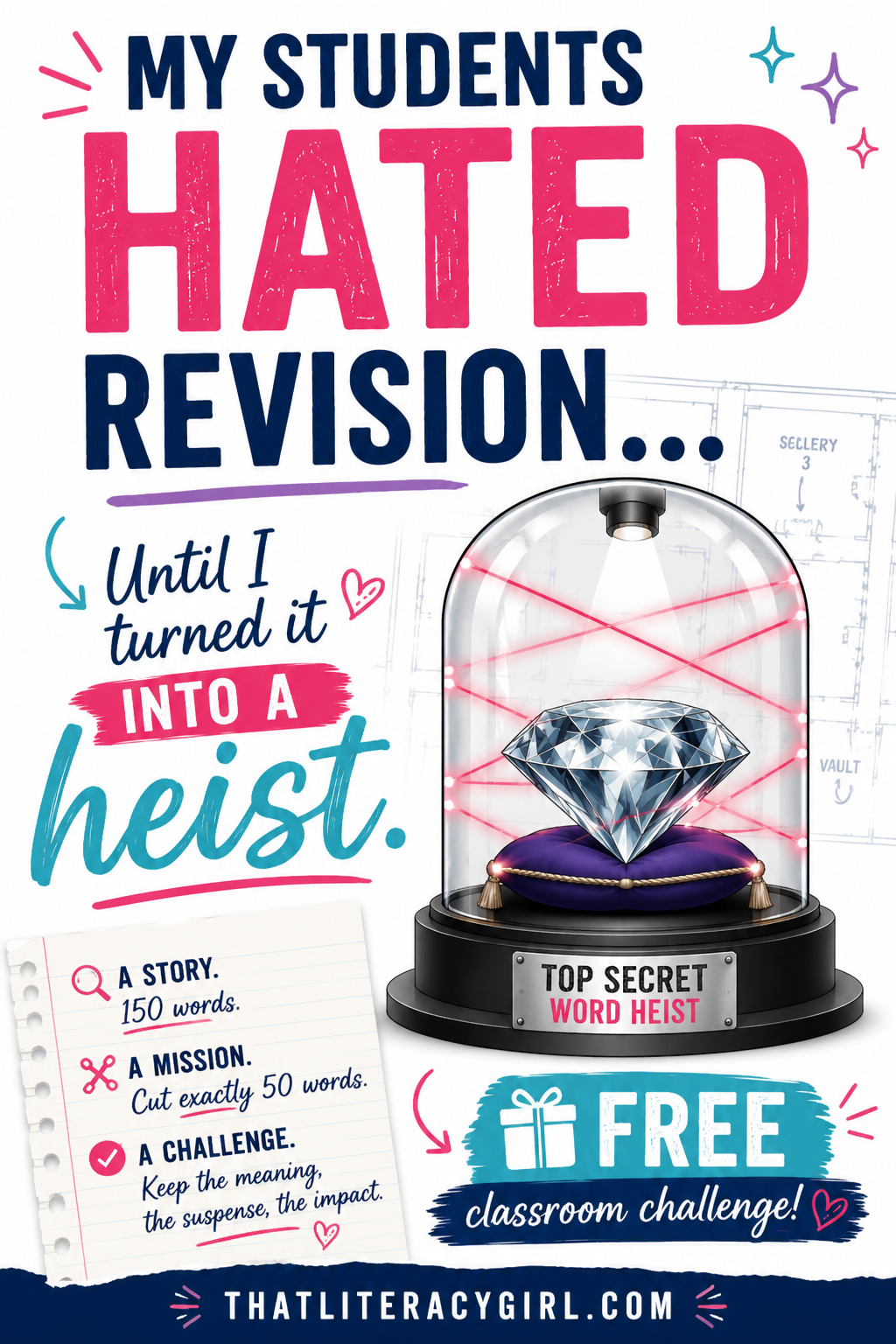
But revision can only be effective if it’s manageable.
By the time students finish a five-page rough draft, they've already poured hours into it.
Asking them to rewrite large chunks feels like asking them to start over.
At that point, we're lucky if they scan through it again, sprinkle in a few commas, and call it revision.
But with 100-word memoirs, students can afford to obsess over a single scene without resenting you and becoming averse to the word “revision.”
Every adjective must earn its place.
Every verb must paint a picture.
Every sentence must serve the story’s purpose.
When the writing is bite-sized, revision stops feeling like punishment and starts feeling like craftsmanship.
The goal isn't to help students write less. It's to help them revise more.
And if you get as jazzed about cutting words and creating poetry as I do, you might even be able to trick your students into liking it too!
That's why I don't begin narrative writing with a multi-page personal narrative!
We start with just 100 words.
Today, when I introduce this assignment to my students, I share the story of Sir Hops A Lot in a 100-word tiny memoir I wrote just for him. It’s not really about a hiccupping frog, though. It’s about what he taught me—that publication doesn’t make writers.
Revision does.
Because sometimes the smallest pieces of writing leave the biggest impact—on readers and on writers.
Get my FREE writing challenge:
👉 Hundred Word Heist.
Can your students steal 50 words without getting caught?
Ready to See Tiny Memoirs in Action?
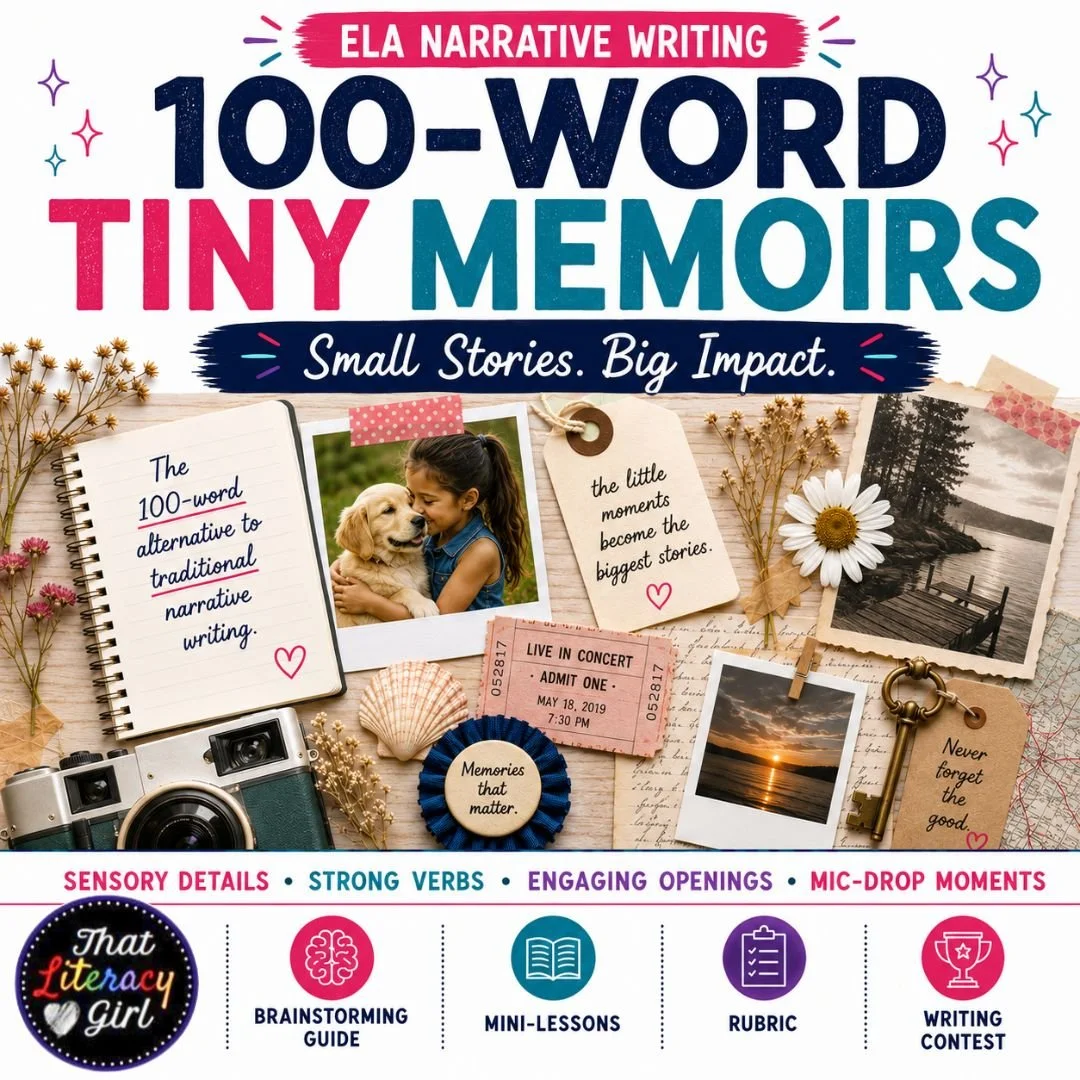
The Hundred-Word Heist is just one engaging activity from my Tiny Memoir unit.
If you're curious how I teach students to:
✓ brainstorm meaningful moments
✓ craft stories worth reading
✓ revise with purpose
✓ celebrate their writing with a classroom Tiny Memoir Contest, you can explore the full approach here.
