The Back-To-School Icebreaker That Isn’t Socially Awkward
Raise your hand if you’re an introvert.
Raise your hand if your social anxiety spirals when you find yourself in a room full of new people.
Raise your hand if speaking in front of people you barely know ties your tongue and stomach in knots.
Good…
Thanks for raising your hand! Now, tell the class a fun fact about yourself.
🫣
Did you just die a little inside?
Same!
Now raise your hand if you’ve put your students in this same position…
😳
Ugh, yep. Me too!
Many traditional icebreakers are designed by extroverts for extroverts.
But we don’t have to keep making introverts squirm… plenty of other teachers will be doing that. Why not do something meaningful instead?
My first few years of teaching, I desperately wanted to find an alternative to the cringe.
I wanted students to get to know each other.
I wanted them to build connections.
I wanted to personally learn more about who they were as people.
But I didn’t want to force them into awkward introductions before they’d even learned each other’s names.
For years, I tried a variety of icebreakers. Some were fine. Most were still cringe.
But then I struck gold— and I haven’t gone back.
Six Sides of Me: Hexagonal Thinking Icebreaker
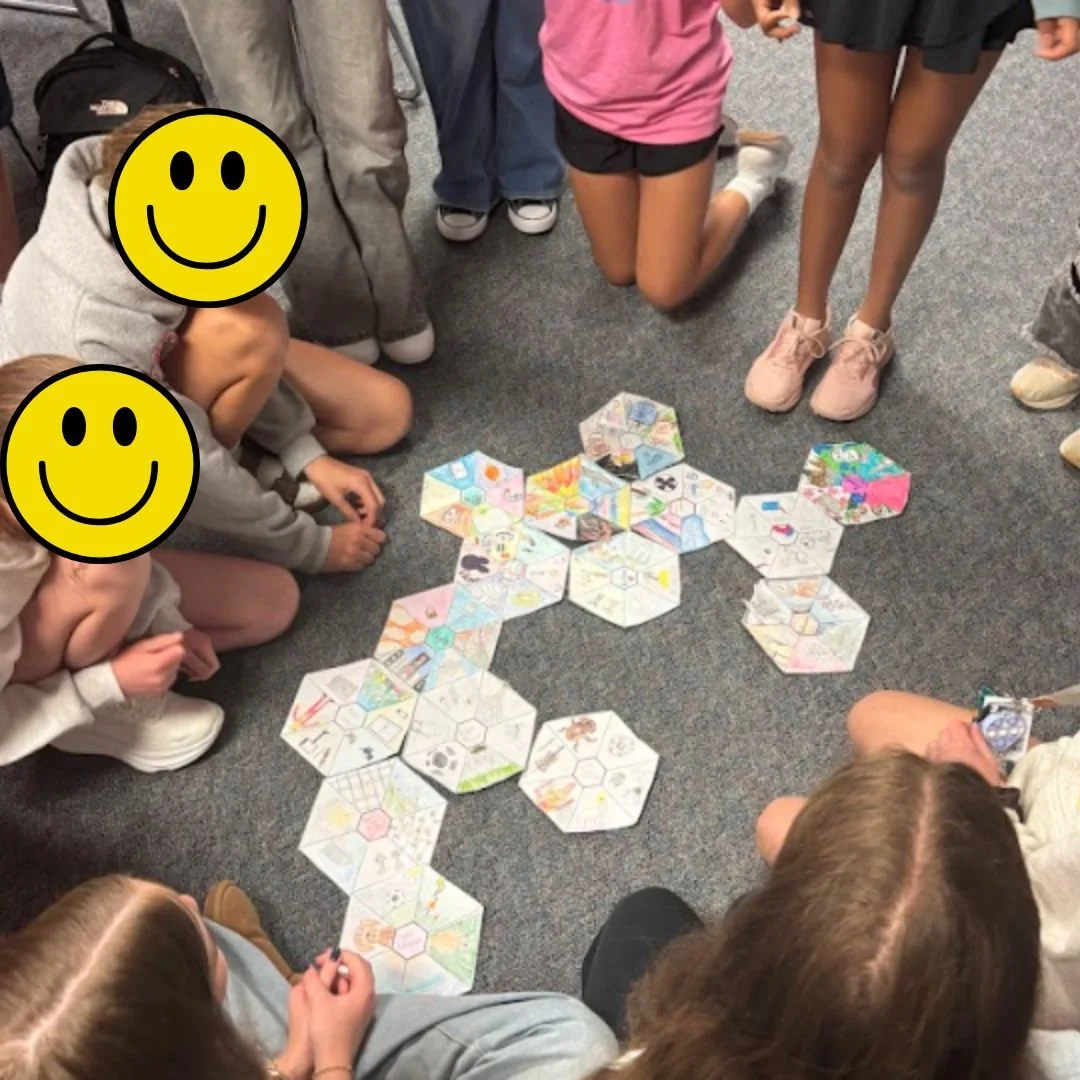
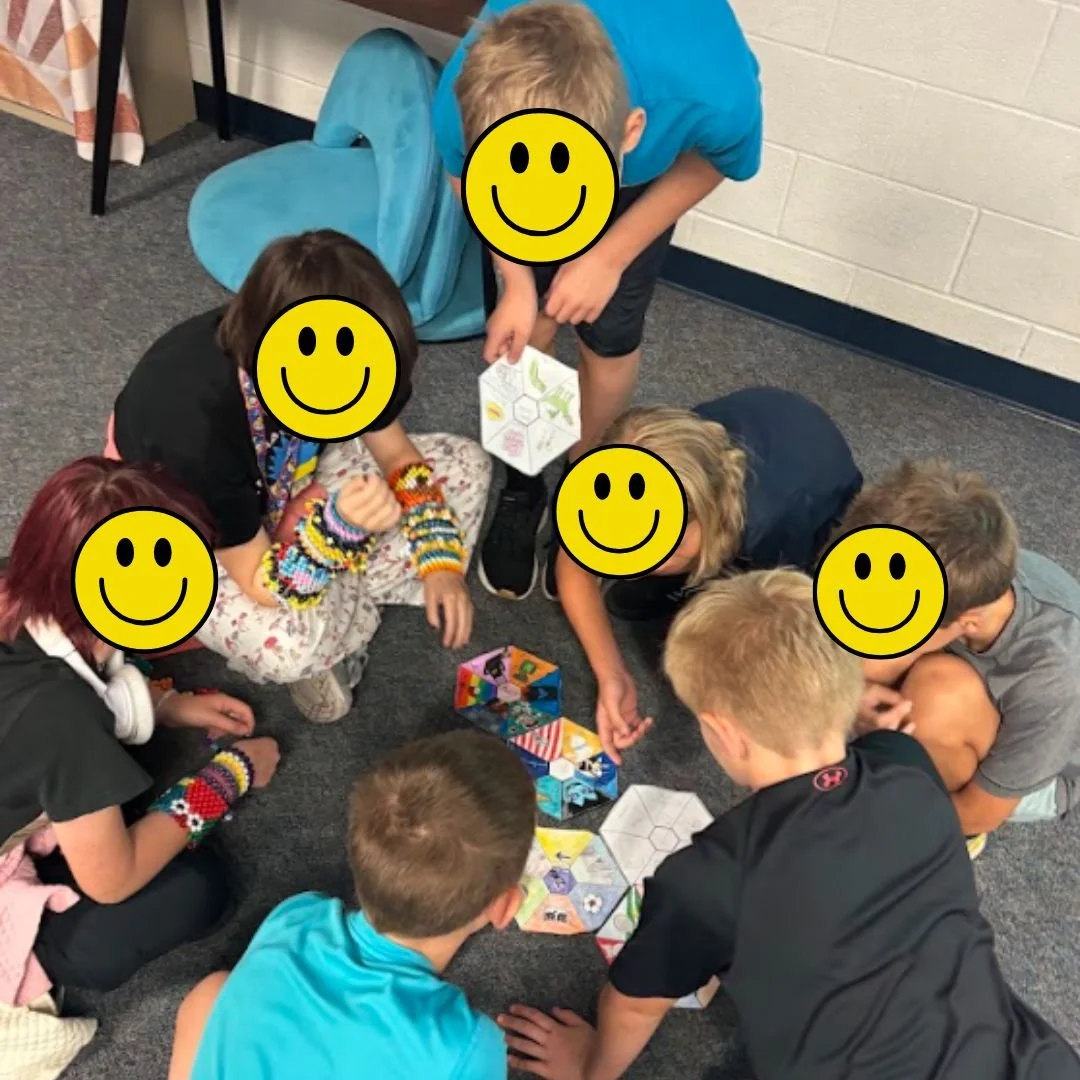
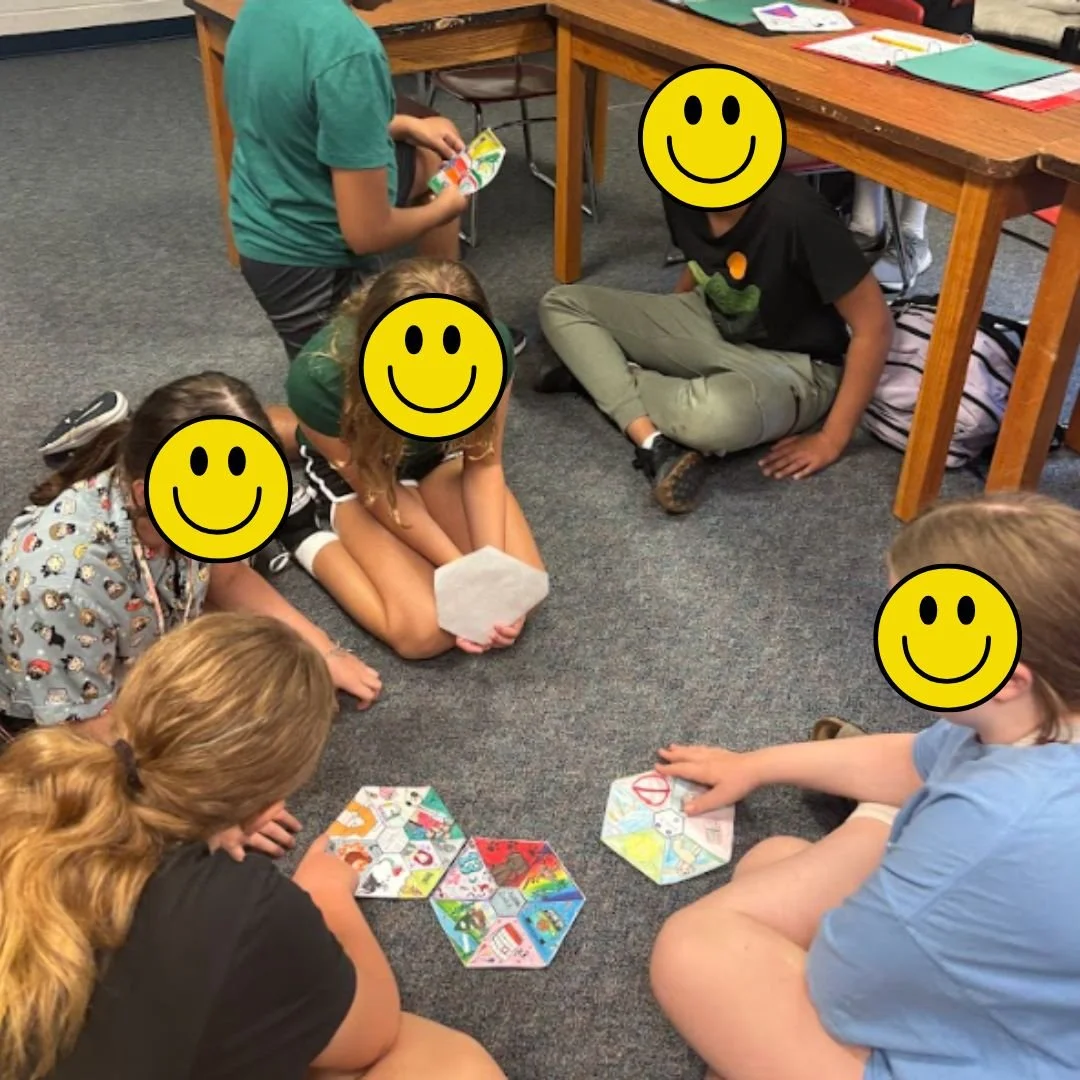
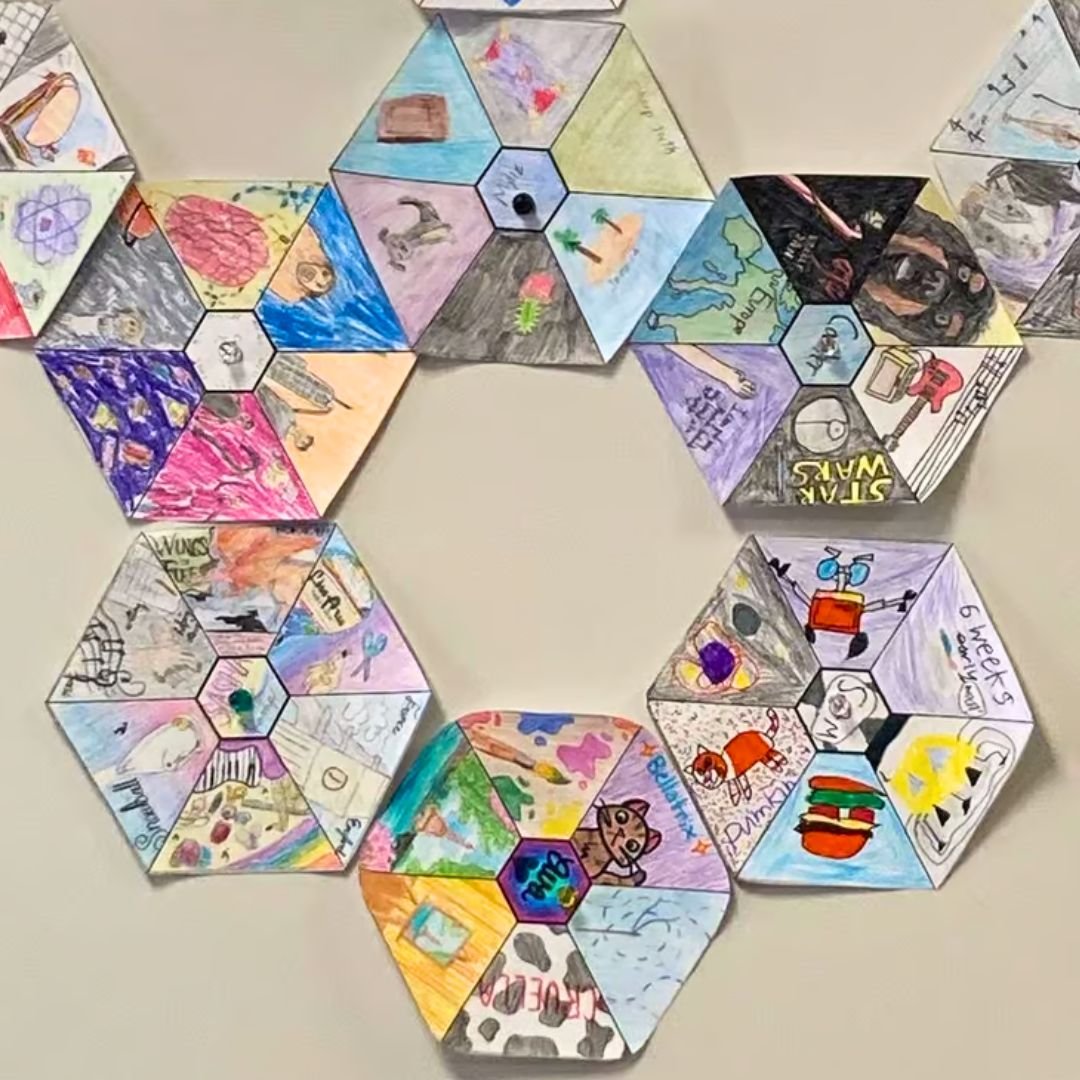
So how does it work?
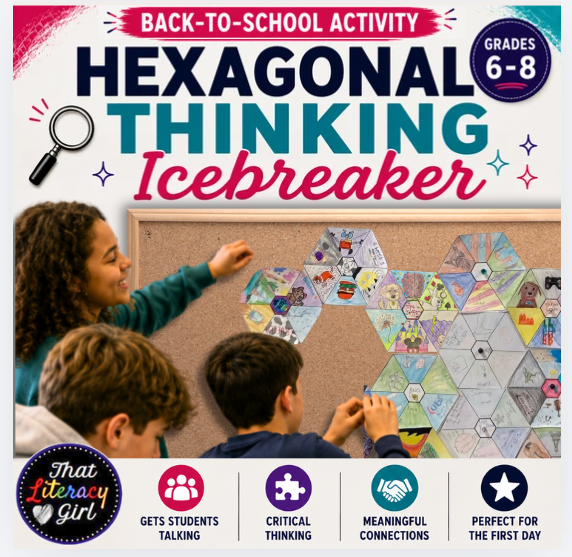
Instead of asking students to stand up and share random facts about themselves, I hand each student a blank hexagon divided into six sections. Each section is labeled with a prompt, asking students to draw something that represents that aspect of their life/personality.
But there’s one catch: No words allowed.
This rule pushes my least artistic students outside their comfort zones, encouraging them to think creatively about how they’ll represent an idea. It also ensures that students have to explain their hexagons to their peers later on. If the hexagons speak for themselves, the students don’t have to.
Once hexagons are completed, colored, and cut out… the magic happens. ✨
In small groups, students share their hexagons with their classmates, listening for things they have in common. Maybe they both love soccer. Maybe they both play an instrument. Maybe they both have a dog, enjoy hiking, or have traveled to the same place.
When they discover a connection, they place their hexagons next to each other on similar sides and explain their thinking with their group.
Hexagons can only touch if they share connections on every touching side.
After students finish making connections within their small groups, I ask them to come together as a whole and connect on an even larger scale. Sometimes, this is as simple as connecting a hexagon from one group with a hexagon in another, but sometimes, they have to be creative in redistributing their connections.
Before long, the classroom floor transforms into a giant web of interconnected ideas and students who were strangers just an hour earlier are laughing, talking, and discovering surprising things they have in common.
And because the connections aren't always obvious—(I had one student whose hexagon referenced his love of milk on three sides and his love for going to Walmart on the other three. Was it ridiculous? Yes, but it definitely captured his personality 😂)—students have to think outside the box to make thoughtful connections.
Why I love it
I learn so much about students from this activity— much more than the six drawings they create reveal.
I learn who is artistic— those everybody is expecting to draw a masterpiece as well as those who are quietly talented— “Wait— who drew this perfect portrait of Peter Griffin?”
I learn who naturally takes on a leadership role and who is happier stepping back and letting others take control.
I learn who communicates clearly, who asks thoughtful questions, and who notices details everyone else overlooks.
I learn which students are willing to think outside the box and defend an unconventional idea as well as which students need encouragement to share their thinking.
And maybe most importantly— I learn which students immediately find their people and which students might need a little extra help finding where they belong.
And that’s what back-to-school icebreakers should really be about— building a community.
By the end of the activity, students don't just know each other's names.
They know who loves horror movies, who plays soccer, who has three dogs, who wants to be a veterinarian, who travels every summer, and who also thinks Walmart and milk deserve three sides of a hexagon. 😂
That's a much stronger foundation for a classroom community than "My favorite color is blue."
And the best part?
After they’ve collaboratively built their design, I snap a photo. I send that photo to parents to show the community we’re building from the start— and then I recreate and display their connections on the wall: A symbol of the connections we’ll continue to build throughout the year. ❤
Looking for a full first week of school plan that aligns with this philosophy?
This activity is also included in my Back-to-School Bundle, which combines this activity and three more of my favorites for a discounted price.
